The solar inverter is the brain of your home power system, responsible for converting the direct current (DC) electricity produced by your solar panels into usable alternating current (AC) electricity for your household appliances. While solar panels are built to last 25 to 30 years, inverters have a shorter operational lifespan and typically require replacement at least once during your system’s lifetime. The question “how much does it cost to replace a solar inverter” is a critical financial query for homeowners experiencing a sudden system shutdown. This comprehensive guide breaks down the true solar inverter replacement cost, outlines the signs of inverter failure, and compares string inverters versus microinverter systems.
Understanding the Cost of Replacing a Solar Inverter
Replacing a solar inverter involves purchasing new power conversion hardware, executing high-voltage electrical labor, and re-commissioning your system’s online monitoring.
Average Solar Inverter Replacement Cost Breakdown
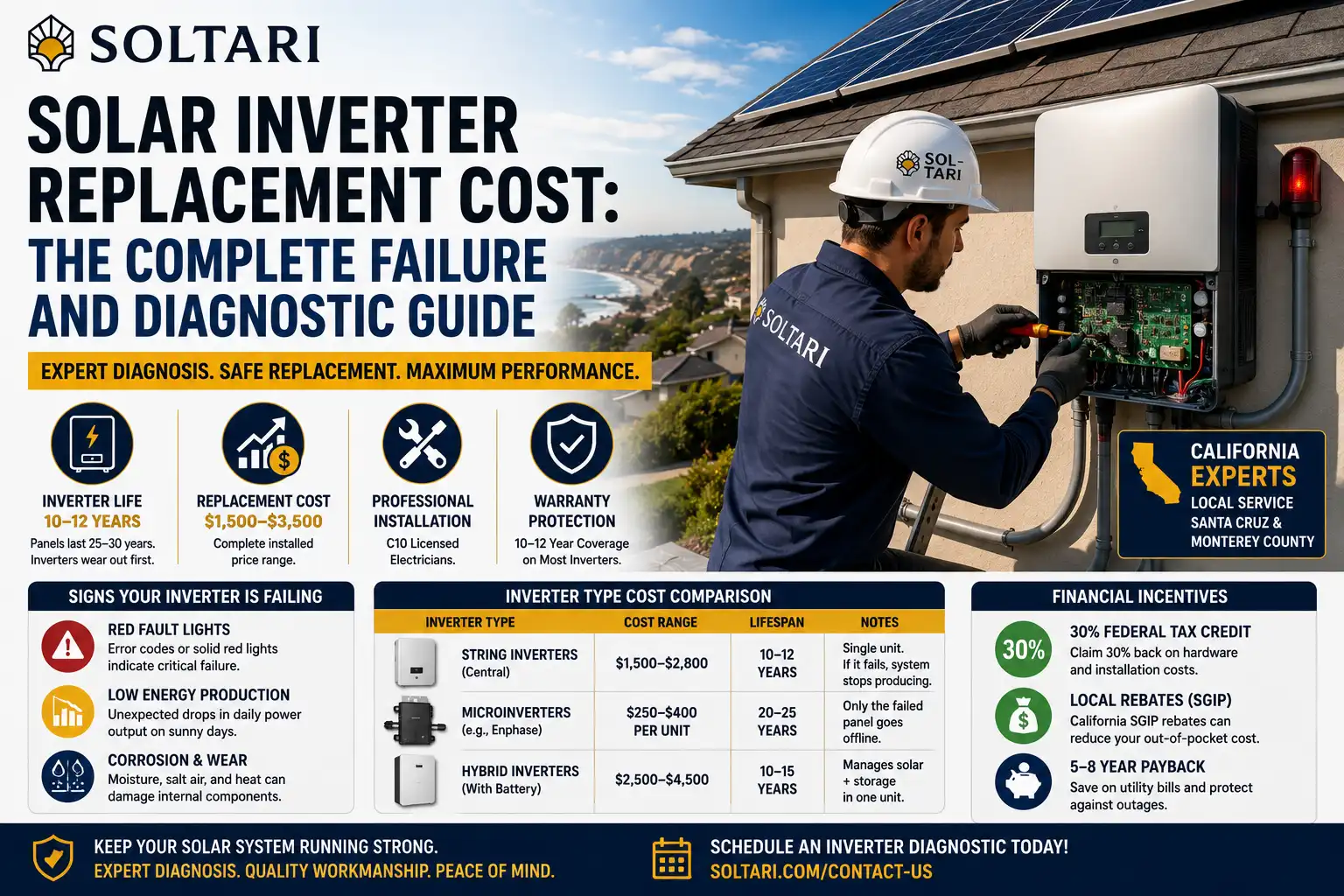
On average, the total solar pv inverter replacement cost ranges from $1,500 to $3,500 for a standard residential system.
-
The Hardware Cost: The replacement unit itself accounts for roughly 60% to 70% of the total invoice, ranging from $1,000 for a basic central string inverter to $2,500 for a smart hybrid or high-capacity system.
-
The Labor and Diagnostic Cost: Electrical labor, system isolation, and utility re-commissioning typically add $500 to $1,000 to the project total. Working with certified solar technicians guarantees that this dangerous electrical work is performed safely and up to modern National Electrical Code (NEC) standards.
String Inverters versus Microinverters Pricing Comparison
The architecture of your solar system significantly impacts your replacement bill:
| Inverter Technology | Replacement Cost Range | Replacement Complexity | Typical Lifespan |
| Central String Inverters | $1,500 – $2,800 | Single-unit replacement on ground/garage wall | 10 to 12 Years |
| Microinverters (e.g., Enphase) | $250 – $400 per unit | Requires climbing roof to un-bolt individual panel | 20 to 25 Years |
| Hybrid Inverters (with Battery) | $2,500 – $4,500 | Complex multi-circuit backup rewiring | 10 to 15 Years |
While central string inverters are cheaper to purchase initially, if one fails, your entire solar array stops producing electricity. Conversely, if a single microinverter fails on a rooftop array, only that individual panel goes offline, leaving the rest of your custom residential solar systems generating power as normal
Labor Costs and Diagnostic Fees for Electrical Repairs
Before an inverter is replaced, an electrician must determine whether the issue is a simple blown fuse, a loose wire connection, a failed DC disconnect, or an internal board failure.
-
Diagnostic Rates: Most professional solar maintenance contractors charge an initial diagnostic fee (typically $150 to $200 per hour) to perform a comprehensive voltage and thermal audit.
-
Permitting Fees: In certain California municipalities, replacing a central string inverter requires a simple electrical permit from the city or county building department, adding $100 to $250 to the final project cost.
Key Signs Your Solar Inverter Is Failing and Needs Replacement
Recognizing the early warning signs of inverter failure prevents prolonged system downtime and lost energy savings.
Red Fault Lights and Error Codes Explained
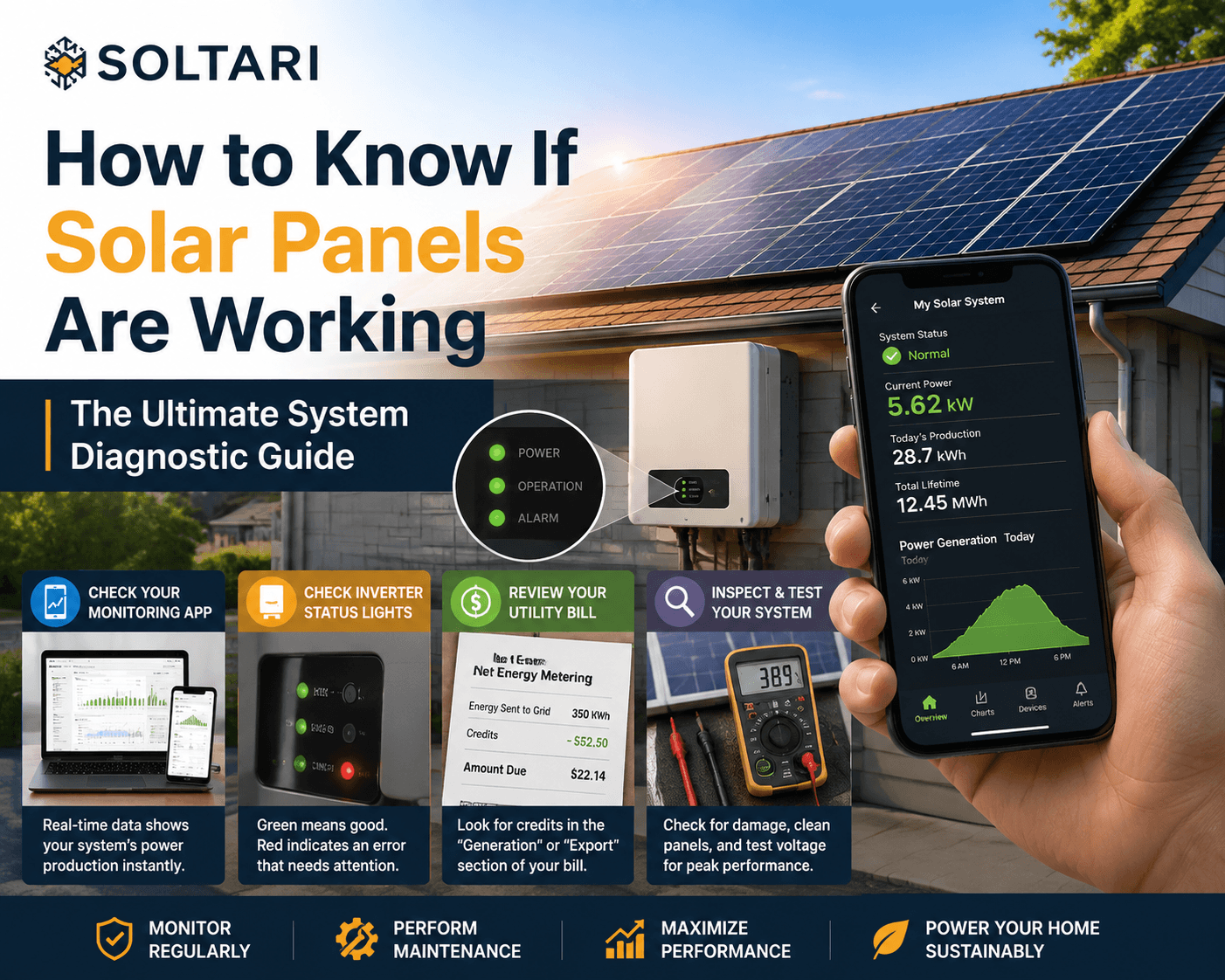
Modern inverters feature external LED indicators or digital display screens:
-
Green Light: System is operating normally and converting power.
-
Yellow/Orange Light: System is experiencing a minor warning (such as high internal temperature or grid voltage fluctuation).
-
Red Light or Solid Error Message: The inverter has shut down due to a critical hardware fault, isolation error, or internal arc fault. You should contact a technician immediately.
Unexpected Drops in Daily Energy Production
If you notice through your mobile monitoring app that your daily energy production has dropped significantly on bright, sunny days, your inverter may be derating itself due to overheating, internal component degradation, or a failing power optimizer on the roof.
Physical Corrosion and Wear in Coastal Environments
In coastal areas like Santa Cruz and Monterey County, salty ocean air can accelerate the corrosion of outdoor electrical enclosures. Moisture ingress through degraded rubber seals can short-circuit the internal inverter boards, causing an unrepairable unit failure.
Solar Inverter Warranties and Financial Incentives
Understanding your warranty terms can save you thousands of dollars when an inverter fails.
How Manufacturer Warranties Cover Replacement Expenses
Most major string inverter manufacturers (such as SolarEdge or SMA) offer a standard 10 to 12-year warranty, while microinverter manufacturers (such as Enphase) offer a 25-year warranty.
-
Hardware Coverage: If your unit fails within the warranty period, the manufacturer will ship a replacement unit free of charge.
-
Labor Exclusions: Most manufacturer warranties do not cover labor costs for the technician to diagnose, remove, and install the new unit. This labor cost remains the homeowner’s responsibility unless backed by a installer workmanship warranty.
Tax Credits and Local Rebates for System Inverter Upgrades
Under the Federal Clean Energy Credit (Section 25D), if you are replacing an out-of-warranty inverter or upgrading to a modern hybrid unit, you may be eligible to claim a 30% tax credit on both the hardware and installation labor costs. Always consult with a qualified tax professional to confirm eligibility.
Integrating Inverter Replacement with Battery Storage Add-Ons
Replacing an old inverter is the ideal time to upgrade to a modern hybrid inverter. A hybrid unit handles both your solar panels and residential energy storage solutions through a single hardware box, eliminating the need to buy a separate battery inverter if you choose to add energy storage later.
Resolving Solar System Errors
Why C10 Licensed Electricians Are Required for Inverter Installation
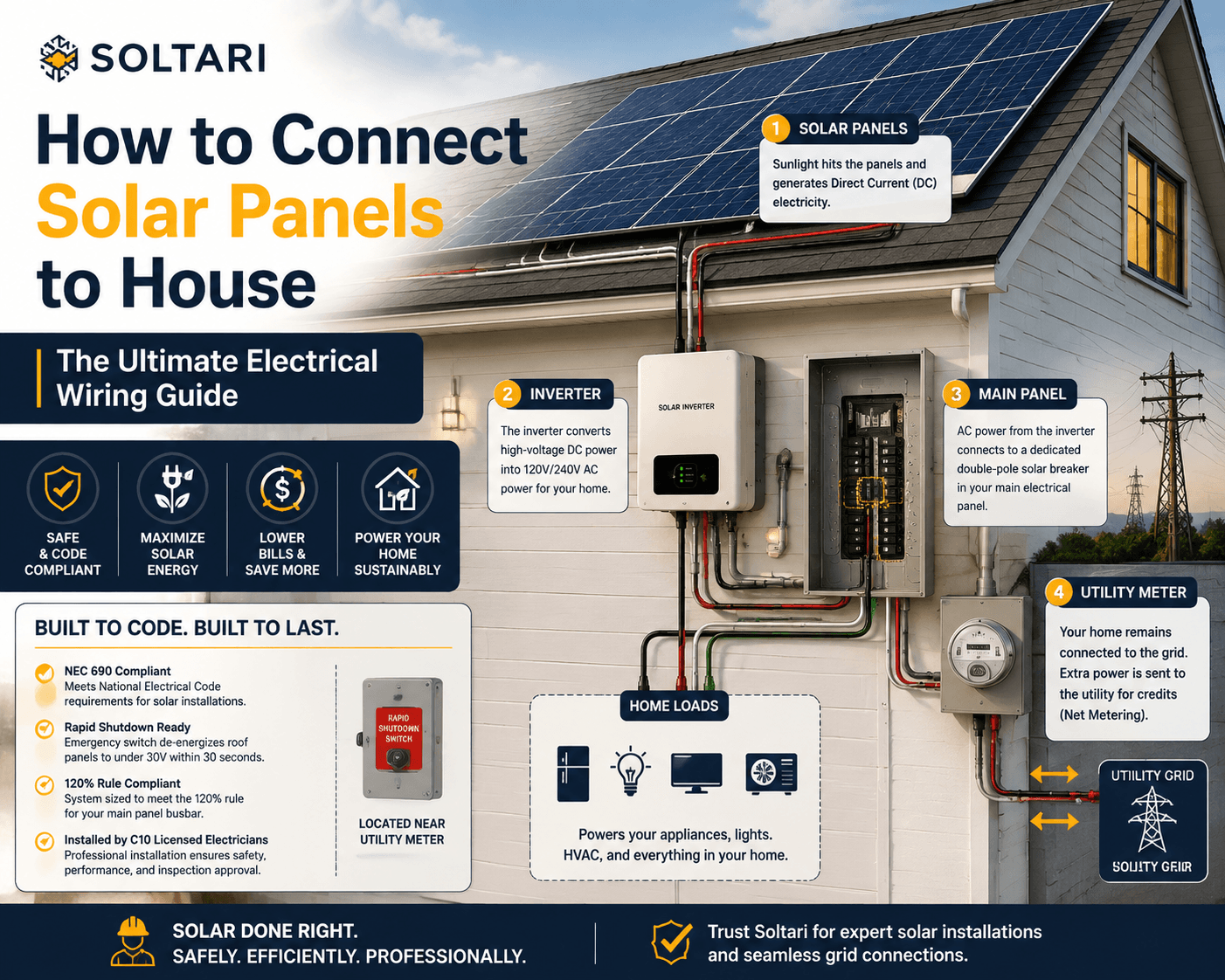
Solar inverters carry high-voltage Direct Current (DC) from the roof and connect directly to your home’s alternating current (AC) main electrical panel. Handling these components requires specialized safety equipment and technical knowledge. Working with a C10 licensed electrical contractor guarantees that your replacement inverter is wired safely, properly grounded, and compliant with all local electrical codes.
The Soltari Service Standard: Diagnostic Precision and Care
At Soltari, LLC, we prioritize engineering quality, quiet precision, and craftsmanship. We provide comprehensive solar system diagnostics, inverter replacements, and system upgrades across Santa Cruz and Monterey County, ensuring your system returns to peak performance quickly.
Schedule an Inverter Diagnostic Check with Our Service Team
Is your solar inverter displaying a red fault light or failing to generate power? Don’t leave your energy production offline. Schedule an inverter diagnostic check today to receive an expert, itemized assessment and repair proposal from our local engineering team.
Frequently Asked Questions About Solar Inverter Replacement
How long does a solar inverter typically last?
Standard string inverters typically last 10 to 12 years before requiring replacement. Microinverters and power optimizers have longer lifespans, usually lasting 20 to 25 years, matching the lifespan of the solar panels themselves.
Can I replace a solar inverter myself?
No. DIY inverter replacement is extremely dangerous and illegal in most jurisdictions. Solar inverters handle high-voltage DC electricity that can cause lethal electrical shocks. Replacement must be completed by a C10 licensed electrical contractor.
Is it better to repair or replace a broken solar inverter?
In most cases, it is better to replace the unit. Modern inverters feature sealed electronic logic boards that are difficult and expensive to repair in the field. Replacing the unit provides a brand-new factory warranty and updated software features.
Why did my solar inverter fail before my solar panels?
Solar panels have no moving parts and are sealed against the elements, allowing them to last 25-30 years. Inverters contain high-stress electronic components (capacitors, logic boards, transformers) that generate heat and continuously convert high-voltage currents, leading to faster natural wear over time.
What happens if my solar inverter company goes out of business?
If the original manufacturer is no longer in business, you can hire an independent C10 electrical contractor to install a compatible third-party inverter (such as SolarEdge or Enphase). The new inverter can be integrated with your existing solar panel array without needing to replace the panels.
Will replacing my inverter affect my California solar NEM status?
Replacing a failed inverter with a unit of equivalent capacity will not affect your grandfathered NEM 1.0 or NEM 2.0 status in California. However, significantly increasing your system’s output capacity during the upgrade may trigger a transition to NEM 3.0 rules.