When planning a home energy transition, the roof is typically the default location for solar panels. However, for homeowners with spacious yards or acreage, choosing ground mounted solar panels is often a significantly smarter, higher-performing, and more flexible alternative. Understanding the mechanical, electrical, and structural differences between roof-mounted systems and ground mount solar is essential for making an informed investment. This guide breaks down the true comparison of these systems, evaluates the installation costs, and analyzes why ground systems can deliver a faster financial payback.
Understanding the Core Differences Between Roof and Ground Mounted Solar Panels
While both systems utilize the same photovoltaic technology to convert sunlight into electricity, their structural and logistical setups are entirely different.
What Are Ground Mounted Solar Panels and How Do They Work
Ground systems are anchored to the earth using heavy-duty metal racking systems supported by concrete piers, ground screws, or helical piles.
-
The Structure: Unlike roof mounts which are bolted to your home’s rafters, ground systems are standalone structures built in an open area.
-
The Racking: The solar modules are mounted on metal racks at a fixed angle or onto active tracking systems that follow the sun throughout the day.
-
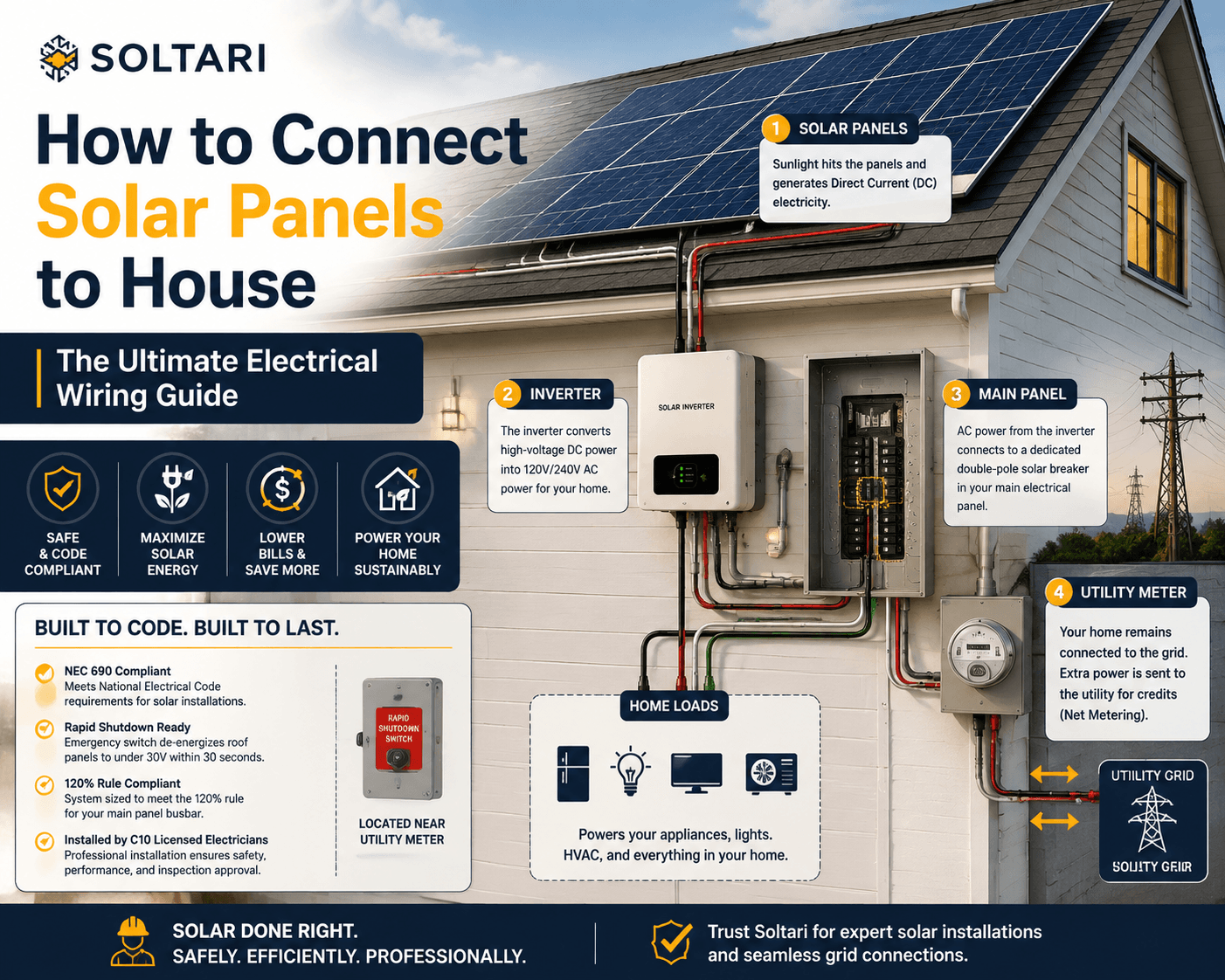
The Connection: High-voltage DC wiring is run through underground trenches from the array directly to your home’s electrical panel, ensuring a clean and safe connection. Working with an expert solar energy team ensures that this civil and electrical engineering is completed to the highest standards.
Comparing the Average Installation Cost for Roof versus Ground Mount Solar
On average, the upfront cost to install a ground-mount system is slightly higher than a rooftop system.
-
Racking and Materials: Ground systems require heavy metal structural frames, steel poles, and foundation materials (such as concrete or ground screws).
-
Civil Engineering: Trenching is required to bury the electrical conduit from the yard to the house, which adds labor and equipment costs.
-
The Return on Investment: Despite the higher initial cost, the increased energy production often offsets the difference, leading to a comparable or even shorter financial payback period.
Rooftop Space Constraints and Why Landowners Choose Ground Mounts
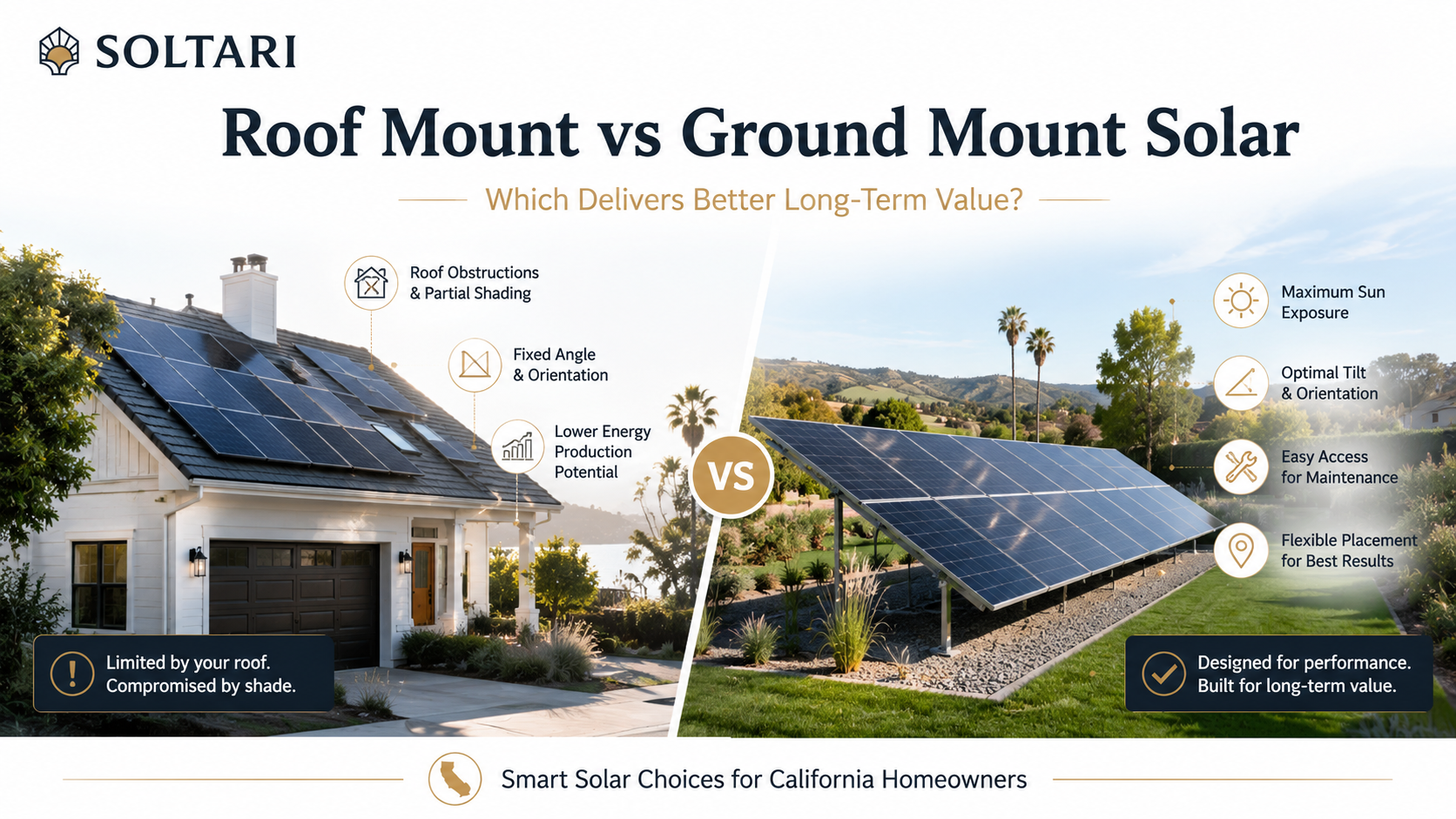
Many older homes or complex architectural designs do not have sufficient roof space for a large solar system.
-
Obstructions: Roof vents, chimneys, skylights, and complex dormers reduce the usable area for solar panels.
-
Shading: Nearby mature trees or neighboring buildings can shade parts of the roof, rendering a roof-mount system highly inefficient.
-
Structural Limits: Older roofs may require expensive structural reinforcement before they can safely support the weight of a solar array. Ground systems bypass all of these limitations, utilizing empty backyard space instead.
Critical Engineering and Performance Advantages of Ground Mount Solar
For those prioritizing system efficiency, ground systems offer significant advantages over traditional rooftop installations.
Optimizing Shading Issues and System Orientation for Maximum Payback
Rooftop systems are constrained by the pitch and orientation of your home’s roof. If your roof faces east or west, you will lose significant energy production compared to a true south-facing system.
-
Perfect Tilt and Azimuth: Ground mounts can be oriented at the perfect angle and direction (true south in the UK and USA) to maximize solar absorption.
-
Zero Shading: The array can be placed in an open area of your land that is completely free from tree or structural shading, ensuring your panels operate at 100% efficiency. This level of optimization is key when designing premium residential solar systems.
Structural Engineering and Wind Load Calculations for Ground Systems
Because ground mounts are standalone structures, they are subject to strict building permits and structural engineering codes.
-
Wind Resistance: Racking systems must be engineered to withstand local wind loads (often up to 110 mph in coastal areas).
-
Soil Testing: Geotechnical engineering is often required to test the soil’s load-bearing capacity before choosing between concrete footings or steel piles. This professional engineering guarantees the structure is safe and stable for over 30 years.
The Operational Maintenance Advantage of Ground Systems for Soltari
Maintaining a solar system on the ground is exponentially easier than on a high, steep roof.
-
Easy Solar Panel Washing: Dust, pollen, and debris can reduce panel efficiency by up to 20%. Ground systems can be easily washed using a standard garden hose and soft brush without requiring ladders or safety harnesses.
-
Diagnostics and Repair: If an inverter or wire fails, troubleshooting and repairs can be completed in a fraction of the time, reducing labor costs. This accessibility ensures a lifetime of easy operations and maintenance, a core value of Soltari, LLC.
The Financial and Practical Payback of Ground Mounted Solar Systems
Ground-mount systems represent a highly efficient financial investment, particularly in regions with high utility rates.
Maximizing Solar Production and Shortening Your Payback Period
Because ground systems can be designed at the optimal tilt and direction, they produce up to 15-25% more energy per panel than a comparable roof-mount system. This increased production directly translates to more offset utility bills and a shorter financial payback period, making the higher upfront cost a smart long-term decision.
Navigating California Permits and Zoning Regulations for Land Mounts
In California, particularly around Santa Cruz and Monterey County, installing a ground structure requires navigating local zoning ordinances:
-
Setback Requirements: Standalone structures must be built a minimum distance from property lines.
-
Height Limits: Most counties restrict the height of ground structures (usually to 8 or 10 feet).
-
Permit Costs: Ground mounts require a combination of building, electrical, and structural permits. A licensed professional solar company handles all of this bureaucracy for you, ensuring full compliance.
Integrating Ground Systems with a Reliable Home Battery Backup
Under California’s NEM 3.0 rules, pairing your solar system with battery storage is absolutely essential for a strong ROI. A ground-mount system allows you to oversized your array if needed, generating excess power during the day to fully charge a reliable home battery backup for use during peak evening utility rates.
Next Steps for Custom Ground Mount Solar Engineering
Why NABCEP Certified Engineering Matters for Your System Design
Because ground mounts are custom civil structures, they require professional engineering. Always work with a company staffed by NABCEP-certified designers and licensed C10 electricians to guarantee structural safety, optimal electrical performance, and compliance with all local zoning laws.
Request a Custom Proposal for Your Ground Mount Solar Project
Don’t settle for a generic rooftop package if your land offers a better alternative. At Soltari, we specialize in custom-engineered ground-mount solar arrays designed for maximum long-term payback and lifetime reliability. Request a custom proposal today to get an accurate, itemized structural and electrical estimate for your property.
Frequently Asked Questions About Ground Mount Solar
Do ground mounted solar panels cost more than roof mounts?
Yes, generally the upfront cost is higher. Ground mounts require additional materials (racking, concrete) and civil labor (trenching). However, the increased energy production and lack of roofing obstacles often result in a comparable lifetime return on investment.
Can I install ground mounted solar panels myself?
No, DIY installation is not recommended and is often illegal. Ground mounts require precise structural engineering, soil testing, heavy machinery for trenching, and licensed C10 electrical work to connect to the utility grid safely.
What is the minimum land size required for a ground mount system?
There is no strict minimum, but you typically need at least quarter of an acre of clear, unshaded yard to accommodate setbacks and property lines. A standard 10kW residential system requires roughly 600-800 square feet of physical space.
Are ground mounted solar panels safer than roof panels during a storm?
Both are extremely safe if engineered correctly. However, ground mounts have the advantage of not putting any physical weight or wind stress on your home’s roof structure. They also eliminate the risk of roof damage during severe weather.
How do I maintain and clean ground mounted solar panels?
Ground panels can be cleaned easily using a soft brush, water, and a squeegee. Because they are at ground level, there is no need for ladders or safety gear. Regular washing is highly recommended to maintain peak energy production.
Will ground mounted solar panels decrease my property’s aesthetic value?
No. Many homeowners prefer ground mounts because they keep the home’s roof completely clean and free of solar panels. A professionally landscaped, low-profile ground array can blend seamlessly into your property, enhancing its overall value.