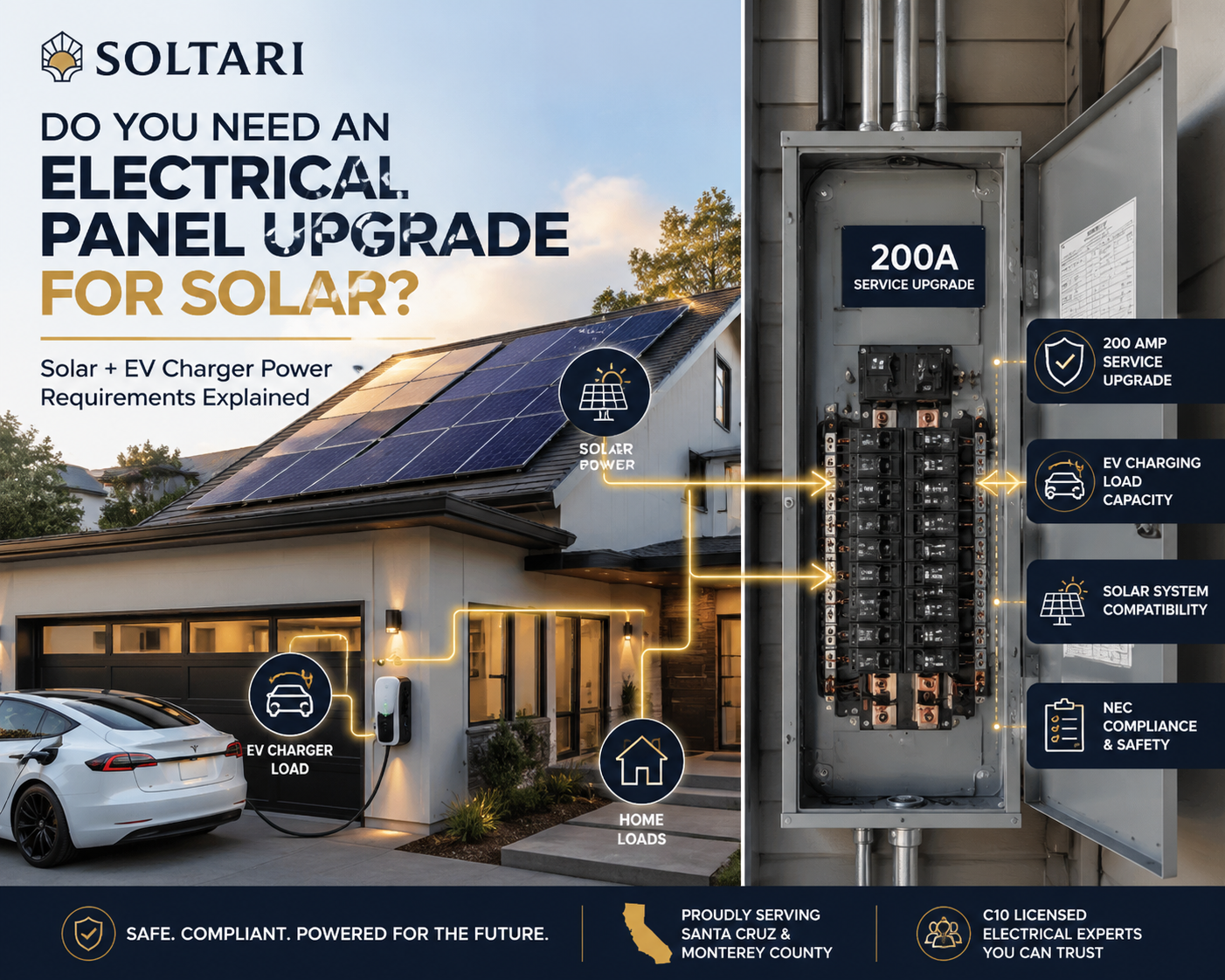
As homeowners adopt clean energy solutions like solar systems, battery storage, and electric vehicles, their home’s infrastructure must evolve to support these heavier loads. For many living in older properties across Santa Cruz and Monterey County, the first step towards energy independence is a main panel upgrade. The question “do I need to upgrade my electrical panel for solar” is one of the most critical technical queries we address. This comprehensive guide explains the science of an electrical service upgrade, breaks down the cost of a panel upgrade and rewiring project, and details how modern codes shape your home’s electrical foundation.
Understanding the Role of Your Main Electrical Panel in Energy Upgrades
Your main electrical panel is the central distribution point that receives electricity from the utility grid and safely routes it to the various circuits throughout your home.
What Is a Main Panel Upgrade and When Is It Necessary
An electrical service upgrade involves replacing your existing breaker box with a modern, higher-capacity unit, typically transitioning from an older 100-amp service to a robust 200-amp or 400-amp service.
-
The Breaker Box: The physical metal enclosure containing circuit breakers that protect your home from electrical overloads and fire hazards.
-
The Service Amperage: Amperage measures the volume of electrical current your home can handle simultaneously. If your home’s total demand exceeds this capacity, breakers will trip consistently. To ensure a seamless upgrade, always partner with licensed solar contractors who possess the C10 licensing required for both solar and main electrical work.
How to Tell If Your Home Needs a Panel Upgrade and Rewiring
Older homes built before the 1990s were typically designed for a maximum load of 60 to 100 amps, which was sufficient for basic lighting and appliances. However, modern lifestyles—featuring smart appliances, heat pumps, air conditioning, and electronics—frequently push these older systems to their absolute limits. If you experience flickering lights, warm breaker panels, or frequently tripped circuits, your home is likely a prime candidate for a comprehensive panel upgrade.
Why Older California Homes Require an Electrical Service Upgrade
Many residential properties in Northern California feature outdated electrical panels, such as those manufactured by Federal Pacific or Zinsco, which are now widely recognized as serious fire hazards. When transitioning to clean energy, replacing these hazardous panels is a mandatory safety measure required by local building inspectors before any permit is issued.
Why Adding Solar Panels or EV Chargers Triggers an Electrical Upgrade
Adding a solar array or a Level 2 electric vehicle charger significantly changes how electricity flows through your home’s electrical panel.
The Technical Rule Behind Electrical Panel Upgrade for Solar Installations
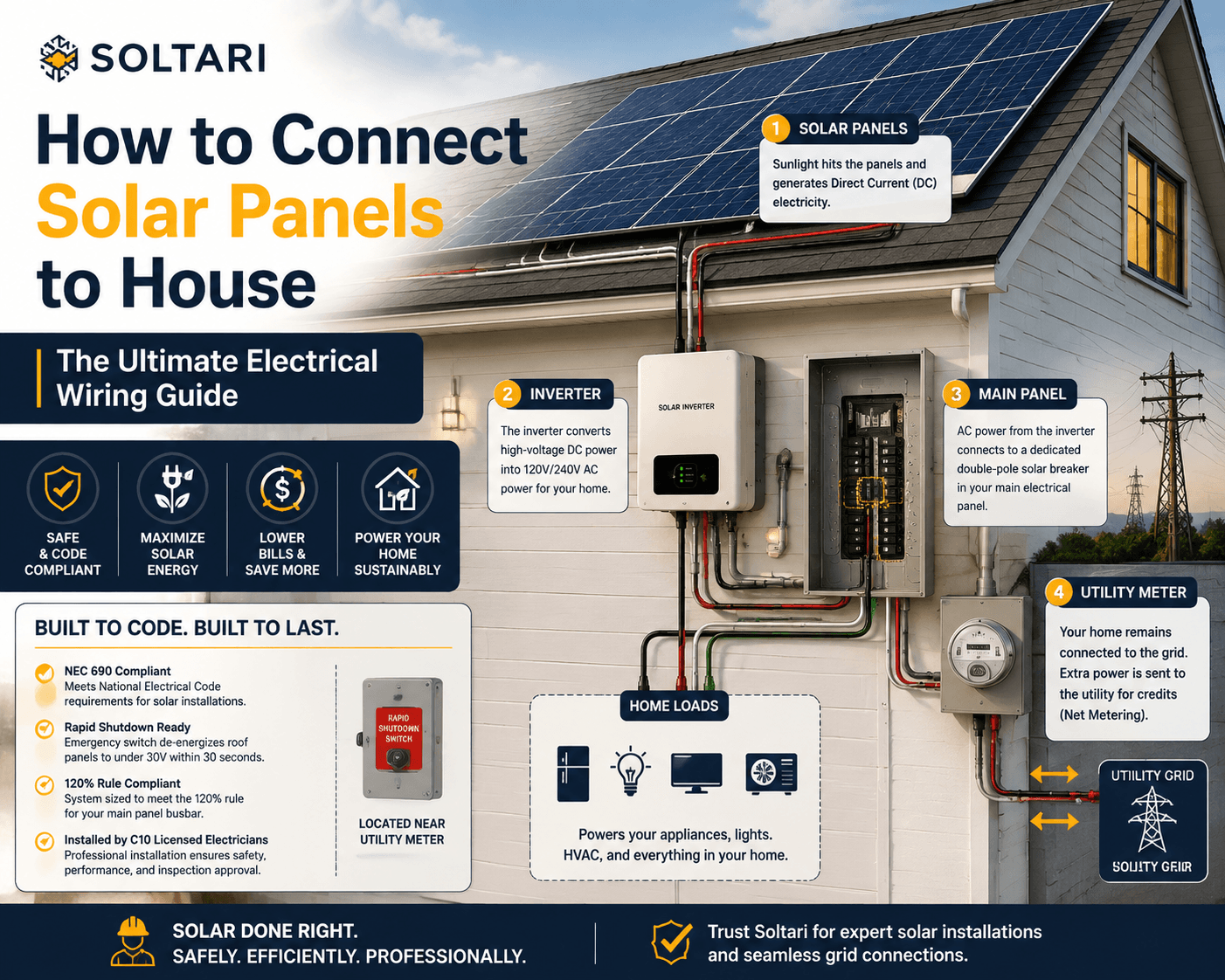
The primary reason a solar system triggers a panel upgrade is the National Electrical Code (NEC) 120% Rule.
-
The Rule: The sum of the main utility breaker and the solar breaker cannot exceed 120% of the busbar’s total rated amperage.
-
The Calculation: On a standard 100-amp panel, the maximum backfeed allowed from a solar inverter is typically only 20 amps, which limits your system size to roughly 3.8 kW.
-
The Solution: Upgrading to a 200-amp panel allows your busbar to safely handle the backfeed from larger, more efficient solar arrays, making it essential for high efficiency residential solar setups.
How Fast Chargers and Electric Vehicles Load Your Home Electrical System
A Level 2 EV charger typically requires a dedicated 40-amp or 50-amp circuit. If your home has a standard 100-amp panel, adding a single EV charger utilizes nearly half of your home’s entire electrical capacity. If you try to charge your vehicle while running the dryer and oven, you will immediately overload the system. Upgrading to a 200-amp panel is the only safe way to accommodate both vehicle charging and daily household usage.
Combining Main Panel Upgrades with Smart Electrical Panels
If you are upgrading your main panel, consider transitioning to a smart electrical panel (such as SPAN).
-
Smart Energy Management: These panels allow you to monitor and control individual circuits from your smartphone.
-
Optimization: Smart panels can dynamically shed non-essential loads during an outage, allowing your battery system to run critical appliances for twice as long. This intelligent control is the perfect companion for advanced home battery backup options.
The True Cost and Process of Upgrading Your Main Electrical Panel
Upgrading your electrical panel is a highly regulated utility and municipal process that requires experienced coordination.
What Will Affect Your Total Electrical Service Upgrade Cost
On average, a standard electrical panel upgrade cost California ranges from $2,500 to $4,500.
-
Permits and Utility Fees: Local municipal building permits and utility connection fees (such as PG&E) are major cost drivers.
-
Trenching and Meter Location: If the local utility requires burying your electrical line underground or relocating the meter to meet modern safety codes, the cost will increase due to excavation and conduit materials.
-
Tax Incentives: Under the Federal Inflation Reduction Act (IRA), homeowners can claim a tax credit of up to $600 (under Section 25C) to help offset the cost of an electrical panel upgrade when completed alongside energy-efficient property upgrades.
Navigating California Permits and Utility Inspections for Meter Upgrades
In California, particularly across Santa Cruz and Monterey, an electrical panel upgrade is a multi-step process:
-
Engineering Design: Preparing a detailed electrical schematic.
-
Permit Acquisition: Submitting the plans to the county building department.
-
Utility Approval: Coordinating with PG&E to authorize the service disconnect and reconnect.
-
The Physical Upgrade: Completing the installation, grounding, and rewiring.
-
Final Inspection: Passing the city or county municipal inspection to restore permanent power.
The Importance of Hiring a Licensed C10 Electrician
Because a main panel upgrade involves handling high-voltage utility lines before the meter, it is an exceptionally high-risk task. Working with a C10 licensed electrical contractor guarantees that your system is wired safely, uses the correct wire gauges, has proper grounding rods installed, and will pass the strict municipal inspections first time.
Your Home Electrical System Upgrade
How Professional Load Analysis Determines Your Panel Requirements
Before purchasing a panel upgrade, a certified professional must perform a detailed residential load calculation. This calculation analyzes your home’s square footage, heating systems, major appliances, and future energy goals (such as heat pumps or hot tubs) to determine if a 200-amp or 400-amp service is required.
The Soltari Engineering Standard: Safe and Future-Proof Systems
At Soltari, LLC, we prioritize quiet precision, craftsmanship, and safety. Our team of highly trained C10 licensed electricians and NABCEP-certified designers specializes in future-proofing homes, ensuring your electrical system is fully optimized to handle solar, batteries, and fast EV chargers seamlessly.
Ready to Power Up? Request a Customized Quote Today
Don’t let an outdated breaker box hold back your home’s energy transition. Trust the local team that combines expert electrical license credentials with advanced solar engineering. Request a customized quote now to receive an accurate, detailed, and compliant estimate for your main panel upgrade.
Frequently Asked Questions About Panel Upgrades
Can I upgrade my main electrical panel myself?
No. An electrical panel upgrade is highly dangerous and requires handling uninsulated utility service lines. It must legally be completed by a licensed electrical contractor (C10) to obtain the necessary permits and pass utility inspections.
What is the difference between a 100-amp and a 200-amp panel?
A 200-amp panel can handle twice the volume of electrical current as a 100-amp panel. This extra capacity is mandatory for modern homes adding heavy electrical loads like EV chargers, heat pumps, air conditioning, and solar battery storage systems.
How long does the actual power outage last during a panel upgrade?
The physical installation typically takes 4 to 8 hours. Your power will be disconnected by the utility company in the morning and restored in the afternoon once the inspector signs off on the safety of the new panel.
Does the Federal Solar Tax Credit cover the cost of a panel upgrade?
Yes, if the panel upgrade is required to support the installation of your solar panel system, the cost of the panel upgrade can be included under the 30% Residential Clean Energy Credit (Section 25D). Always consult with a certified tax professional.
What is a sub-panel and do I need one instead of a main panel upgrade?
A sub-panel adds more circuit breaker slots but does not increase your home’s total electrical capacity from the utility. If your main panel is maxed out at 100 amps, adding a sub-panel will not help you run an EV charger; you need a main panel upgrade.
Why is proper grounding critical during a panel upgrade?
Proper grounding directs accidental electrical surges (like lightning strikes or short circuits) safely into the earth instead of through your home’s appliances or plumbing. A licensed electrician will install two copper grounding rods spaced 6 feet apart to guarantee safety.