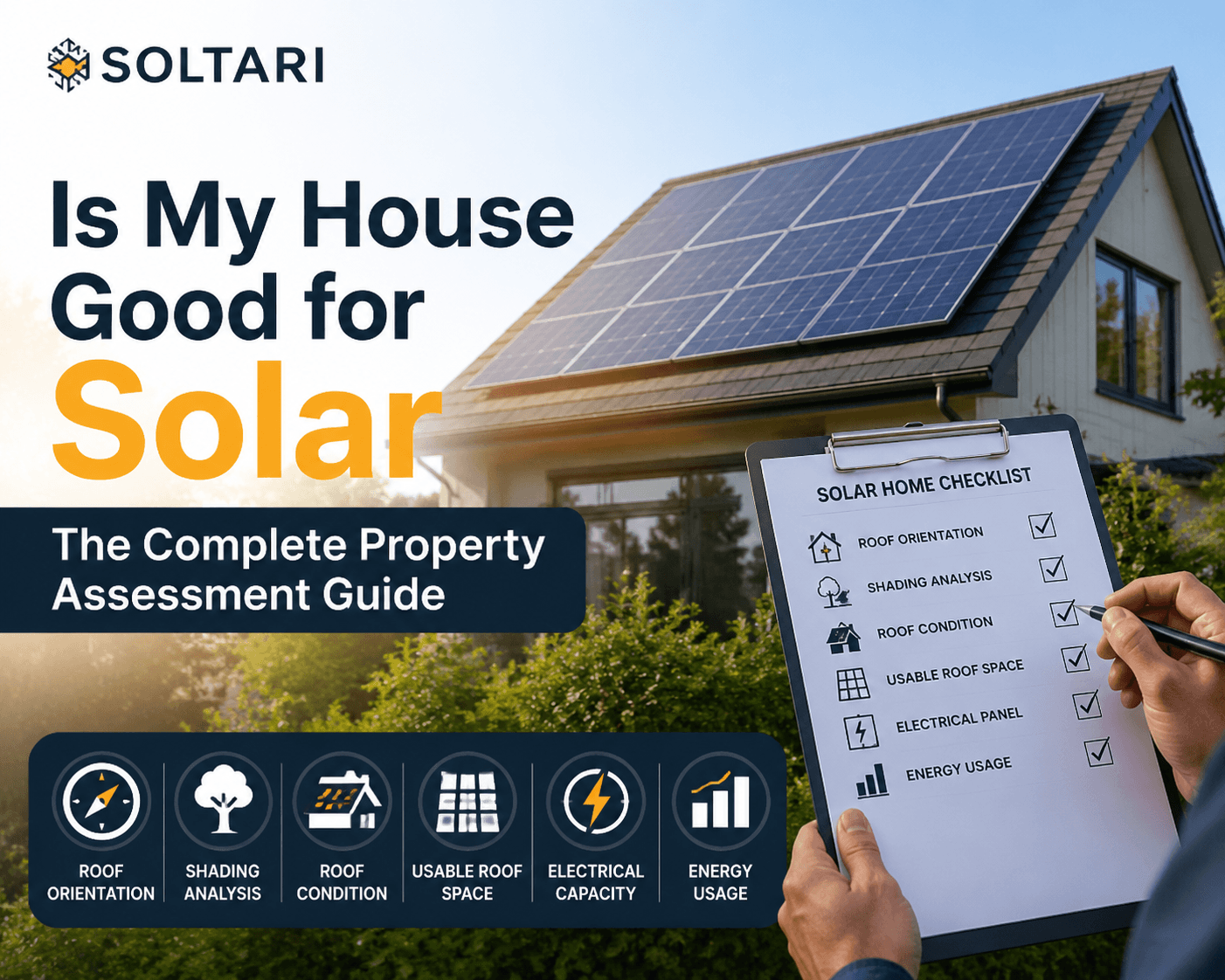
Deciding to power your home with renewable energy is one of the most rewarding financial and environmental decisions a homeowner can make. However, before investing in rooftop panels, every homeowner must ask one fundamental question: is my house good for solar energy generation? Not every property is naturally suited for rooftop energy generation, and understanding the physical, geographical, and electrical factors that dictate solar feasibility is critical to ensuring a strong financial payback. If you are wondering is my house good for solar, you must evaluate your roof orientation, shading exposure, structural health, monthly electric bills, and local utility rates. This comprehensive guide walks you through the six essential criteria used by professional engineers to determine if your home is a prime candidate for solar power.
Primary Factors Determining If Your House Is Good for Solar Panels
A property’s solar potential is primarily governed by the amount of direct sunlight its roof receives throughout the year.
Roof Orientation and Why South or West Facing Roofs Are Ideal
The direction your roof faces is the single most important factor when evaluating is my house good for solar energy production.
-
1. South-Facing Roofs: In the Northern Hemisphere, south-facing roofs receive the most direct, un-shaded sunlight throughout the entire day. This orientation generates the maximum possible kilowatt-hours (kWh) per panel.
-
2. West-Facing Roofs: West-facing roofs receive strong afternoon sunlight. In California, where Time-of-Use (TOU) utility rates peak between 4:00 PM and 9:00 PM, west-facing residential solar panel systems are exceptionally valuable because they generate electricity when grid power is most expensive.
-
3. East and North Facing Roofs: East-facing roofs produce about 15% less energy than south-facing roofs, while north-facing roofs are generally unsuited for solar installations due to poor sunlight exposure.
Evaluating Roof Shading to Know If Your House Is Good for Solar
Shading is the ultimate enemy of solar panel efficiency. When asking is my roof good for solar, you must perform a thorough shade analysis throughout the day.
-
The Impact of Shade: Even partial shading on a single solar panel can reduce the output of an entire string of traditional panels.
-
Obstruction Audits: Tall trees, chimney stacks, neighboring two-story buildings, and satellite dishes cast shadows that shift across your roof as the seasons change.
-
Microinverter Solutions: If your roof experiences light morning or late-afternoon tree shade, installing microinverters or power optimizers ensures that each panel operates independently, allowing unshaded panels to continue producing power at 100% capacity.
Roof Angle and Pitch Optimization for California Sunlight
The slope or tilt of your roof influences how perpendicular sunlight strikes the glass surface.
-
The Ideal Angle: The optimal roof pitch for solar panels in California generally matches the latitude of your location, typically between 25 and 35 degrees.
-
Steep versus Flat Roofs: Steeply pitched roofs receive less winter sunlight, while flat roofs require specialized tilt-racking systems to prevent rainwater from pooling on the glass surface and to maximize light absorption.
Physical Property Checks to See If Your Roof Is Good for Solar
Beyond sunlight exposure, your home’s physical infrastructure must be capable of supporting the weight and electrical load of a solar array.
Assessing Shingle Age and Structural Roof Rafter Capacity
Solar panels have an operational lifespan of 25 to 30 years. Therefore, evaluating your roof’s age is essential when determining is my roof good for solar panel installation.
-
The 15-Year Rule: If your asphalt shingle roof is older than 15 years, it is highly recommended to repair or replace the roof before mounting solar panels. Installing panels on an aging roof means you will eventually have to pay 4,000 for a solar detach and reset service when the roof needs replacement a few years later.
-
Rafter Strength: Certified engineers must inspect your attic rafters to ensure they can safely support the dead load of the racking and panels (roughly 3 to 4 pounds per square foot) as well as wind uplift forces during coastal storms.
Usable Roof Square Footage to Determine If Your House Is Good for Solar
A standard residential solar panel measures roughly 17.5 square feet (approximately 3.5 feet by 5 feet).
-
Space Requirements: An average 8 kW solar array requiring 20 modern 400-watt panels needs approximately 350 to 450 square feet of unobstructed, contiguous roof space.
-
Navigating Roof Vents: Dormers, skylights, plumbing vents, and attic exhaust pipes fragment usable roof space. If your roof is too small or fragmented, ground-mount systems or high-efficiency panels offer viable alternatives for homes asking is my house good for solar. For larger estates or rural properties, exploring commercial solar energy engineering principles can help optimize large-scale land arrays.
Main Electrical Panel Amperage and Upgrade Requirements
Your solar array must feed its generated power into your home’s central electrical panel.
-
The 100-Amp Limit: Older homes with 60-amp or 100-amp electrical service panels frequently lack the busbar capacity to accept a solar backfeed breaker under the National Electrical Code (NEC) 120% Rule.
-
Main Panel Upgrades: If your breaker box is undersized, completing a main panel upgrade (MPU) to 200-amp service is required. An MPU ensures your electrical panel can safely handle your solar array, electric vehicle chargers, and home appliances simultaneously.
Financial Criteria to Confirm If Your House Is Good for Solar Energy
Physical suitability is only half the equation; your home must also meet specific financial criteria to guarantee a fast solar payback.
Your Monthly Electric Bill Threshold and Energy Consumption
If you are wondering is my house good for solar from an economic standpoint, look directly at your average electric bill.
-
1. The $100 Bill Threshold: If your monthly utility bill is consistently under 75-100, the financial savings from going solar may take longer to offset the initial installation cost.
-
2. High-Usage Households: If your monthly bill exceeds 150-200 (due to air conditioning, swimming pools, heat pumps, or electric vehicles), going solar will deliver massive, immediate monthly savings, yielding a rapid 5-to-7-year payback period.
Navigating California Net Metering Rules and Utility Rate Hikes
In California, utility rate structures make home solar more valuable than ever.
-
PG&E Rate Hikes: Continuous, double-digit rate increases by investor-owned utilities mean that doing nothing gets more expensive every year.
-
NEM 3.0 Self-Consumption: Under California’s Net Billing Tariff (NEM 3.0), sending excess solar power back to the grid yields low credit (a 75% reduction compared to NEM 2.0). To make solar worth it, your home system must be designed to store daytime solar energy for use during expensive evening peak hours.
Pairing Home Systems with Backup Battery Power Systems
To maximize the answer to is my house good for solar under NEM 3.0, pairing panels with energy storage is essential.
-
Peak Rate Avoidance: Storing excess daytime energy inside backup battery power systems allows you to avoid purchasing utility grid power during peak evening hours, maximizing your financial savings.
-
Outage Resilience: During winter storms or Public Safety Power Shutoffs (PSPS), a home battery ensures your critical appliances (refrigerator, well pump, internet, lights) stay fully powered when the grid fails.
Evaluating Property Suitability Factors Summary
When analyzing is my house good for solar, use this reference table to evaluate your property’s readiness:
| Property Assessment Factor | Ideal Solar Candidate Condition | Challenging Condition (Requires Solution) | Recommended Engineering Solution |
| Roof Orientation | South or West facing | North facing or heavily shaded | Install microinverters or ground-mount array |
| Roof Condition | Under 10-15 years old | Older than 15-20 years or leaking | Complete roof repair before solar installation |
| Shading Exposure | Unshaded between 9 AM – 4 PM | Heavy tree or chimney shade | Use panel-level optimizers or tree trimming |
| Electrical Panel | 200-amp modern breaker box | 60-amp or 100-amp outdated panel | Perform a 200-amp main panel upgrade |
| Monthly Electric Bill | Over $150 per month | Under $75 per month | Right-size smaller system or focus on storage |
| Available Roof Space | 400+ sq ft unobstructed | Highly fragmented roof space | Use high-efficiency monocrystalline panels |
Determine If Your House Is Good for Solar
Determining whether your home is truly ready for solar requires a professional, site-specific engineering analysis.
Why NABCEP Certified Engineering Provides Accurate Assessments
Online calculators provide rough estimates, but they cannot assess rafter health, electrical busbar capacity, or subtle shade angles. At Soltari, LLC, our team of NABCEP-certified designers and C10 licensed electrical contractors brings quiet precision, technical expertise, and craftsmanship to every site audit. We evaluate your property from roof to main panel, ensuring that any system we recommend is engineered for maximum 25-year reliability. Partnering with a California custom solar energy company guarantees that your system is designed specifically for your local coastal weather.
Book a Site Evaluation Consultation for Your Home
Don’t guess whether your home is ready for clean energy. Get an accurate, itemized engineering assessment and financial proposal tailored to your specific roof and electrical setup. Book a site evaluation consultation today to discover how much money a custom solar and battery system can save your household.
Frequently Asked Questions About Home Solar Suitability
Is my house good for solar if my roof faces East or West?
Yes. While south-facing roofs generate the most total energy, west-facing roofs are highly valuable in California because they produce electricity during expensive late-afternoon peak utility hours (4:00 PM to 9:00 PM). East-facing roofs generate strong morning power and can still deliver an excellent financial return when properly sized.
Can I get solar panels if my roof has partial tree shade?
Yes, but it depends on the severity of the shade. If your roof experiences light or seasonal shade, using microinverters or power optimizers allows unshaded panels to operate at full efficiency. If shade is severe throughout the entire day, trimming trees or choosing a ground-mounted solar system in an unshaded area of your yard is recommended.
Is my house good for solar if I have a flat roof?
Yes, flat roofs are excellent for solar. Installers use ballasted mounting racking that tilts the panels at the optimal angle toward the sun. Ballasted systems are held down by concrete weights, meaning they require zero roof penetrations, completely eliminating any risk of rooftop leaks.
How do I know if my electrical panel needs to be upgraded before getting solar?
Look at the main breaker inside your home’s electrical box. If it reads 100 amps or 60 amps, or if your breaker box is an outdated brand (like Zinsco or Federal Pacific), you will likely need a 200-amp main panel upgrade to safely handle solar backfeeding under National Electrical Code (NEC) rules.
What happens if I install solar panels on a roof that needs to be replaced in five years?
If you replace your roof after solar panels are installed, you will have to pay a professional solar company for a solar panel detach and reset service. The technicians will temporarily remove the panels, store them safely during the roof replacement, and remount them afterward, which can add 2,000-4,000 in labor costs. It is always better to replace an old roof before installing solar.
Will solar panels work if I live near the coast with frequent fog?
Yes. Modern monocrystalline solar panels can still generate power from diffuse sunlight penetrating through coastal fog or cloud cover (typically producing 10% to 25% of their sunny-day output). Additionally, coastal temperatures are cooler, which helps solar panels operate at higher electrical efficiency compared to hot inland desert regions.