When homeowners consider transitioning to renewable energy, one primary worry frequently holds them back: the fear of structural damage or roof leaks. The question “do solar panels damage your roof” is an essential query for anyone protecting their home’s most important structural barrier. The short answer is no when installed by certified professionals, solar panels will not damage your roof. In fact, properly engineered solar arrays can actually extend the lifespan of your shingles beneath them. This comprehensive guide breaks down how solar racking attaches to roof rafters, explains how to avoid leaks, and reveals what roof types are best for solar installations in California.
The Truth About Solar Panels and Roof Damage
Understanding the mechanical engineering of solar mounting systems is the first step toward dispelling common myths about roof damage.
How Professional Installation Prevents Rooftop Leaks and Structural Issues
A common misconception is that drilling holes into a roof inevitably leads to water leaks.
-
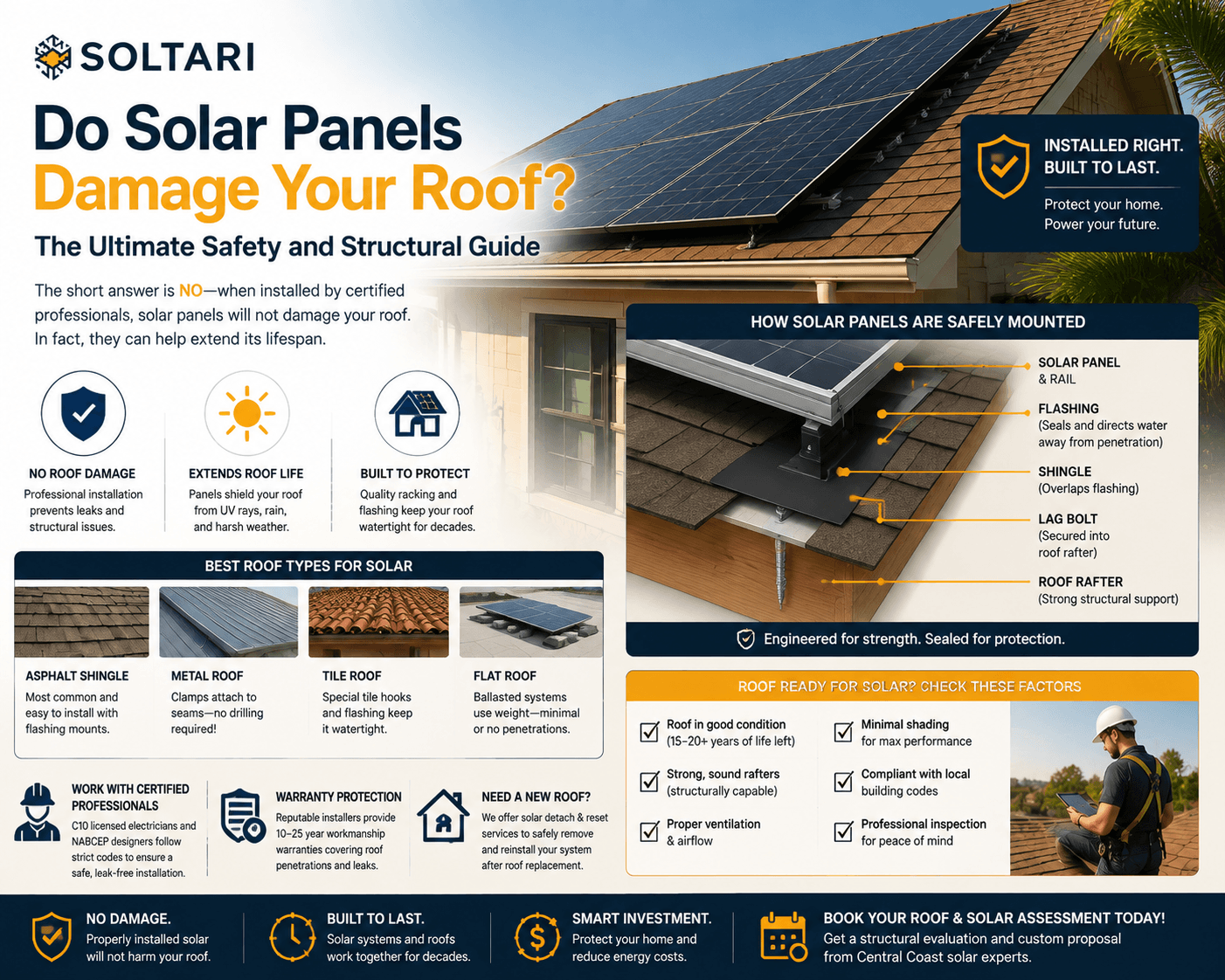
The Attachment Method: Solar racking is anchored directly into your roof’s wooden rafters using heavy-duty stainless steel lag bolts.
-
The Leak Protection: To guarantee a watertight seal, every penetration point is covered with a specialized metal shield called flashing. The flashing slides beneath the surrounding shingles and is sealed with industrial-grade, weather-proof sealant. This creates a barrier that is often more water-resistant than the original roof surface itself. Working with top rated California solar contractors ensures that these flashing protocols are executed without flaw.
Do Solar Panels Protect Your Roof from Weathering and UV Rays
A surprising benefit for homeowners asking will solar panels damage my roof is that solar arrays actually act as a protective shield for your roof deck.
-
UV Shielding: Solar panels absorb and block intense ultraviolet (UV) radiation, which is the primary cause of shingle degradation and cracking over time.
-
Weather Protection: The panels absorb the impact of rain, hail, and wind, protecting the underlying roof material from direct weather exposure. Shingles located directly beneath a solar array frequently look brand new even after 20 years of service.
Understanding the Flashing and Racking Systems That Keep Roofs Watertight
Modern solar racking hardware (such as IronRidge, QuickMount, or Unirac) is specifically engineered to route water away from penetration points.
-
Elevated Rails: Racking systems elevate the solar panels 3 to 6 inches above the shingles.
-
Airflow and Drainage: This elevation allows rainwater and debris to flow underneath the array naturally while promoting cool airflow behind the panels, which improves panel efficiency during hot summer days.
Critical Factors That Determine Roof Safety During Solar Installation
Your roof’s material, age, and structural integrity dictate the installation approach and safety measures required.
What Roof Is Best for Solar Panels in California
Solar panels can be safely mounted on virtually any roof type, but certain materials offer easier installation paths:
-
Asphalt Shingle Roofs: The most common and easiest roof type for solar installation. Flashing mounts slide seamlessly under asphalt shingles to create a perfect seal.
-
Standing Seam Metal Roofs: The absolute easiest and safest roof for solar. Racking clamps directly onto the raised seams of the metal roof without drilling a single hole, eliminating any risk of leaks.
-
Tile Roofs (Spanish Clay or Concrete): Requires specialized care. Installers use “tile hooks” or replace individual tiles with flashing mounts to prevent cracking brittle tiles during installation.
-
Flat Roofs: Utilizes ballasted mounting systems that use heavy concrete blocks to hold the array down using gravity, requiring minimal or zero roof penetrations.
Assessing Your Shingle Age and Structural Rafter Strength Before Installing
The single biggest mistake a homeowner can make is installing solar panels on an old, failing roof.
-
The Lifespan Rule: Solar panels last 25 to 30 years. If your roof shingles are older than 15-20 years or showing signs of dry rot, you should repair or replace the roof before installing solar.
-
Rafter Inspection: A certified installer inspects your attic to verify that your roof rafters are structurally sound and capable of supporting the dead load (roughly 3 to 4 pounds per square foot) of the solar equipment.
How Installing Solar Affects Your Existing Roof Warranty
Homeowners frequently ask if installing solar will void their roof warranty.
-
The Reality: Adding solar penetrations may void the roofing manufacturer’s warranty specifically for the shingles that were drilled through.
-
The Installer Workmanship Warranty: To protect you, reputable solar contractors provide an independent workmanship warranty (typically 10 to 25 years) that specifically covers the roof penetrations and guarantees against leaks caused by the solar installation.
How to Avoid Roof Leaks and Damage During Solar Array Installation
Eliminating the risk of roof damage requires working with certified, experienced professionals who follow strict engineering standards.
Why C10 Licensed Electricians and NABCEP Designers Prevent Structural Errors
Uncertified handymen or fly-by-night installers are the primary cause of rooftop leaks and damage.
-
Structural Failures: Unqualified workers may miss the roof rafters when driving lag bolts, leaving holes in the roof deck that are not structurally supported.
-
Electrical Hazards: Improperly secured conduit or ungrounded racking can create electrical short circuits or fire risks. Working with a C10 licensed electrical contractor guarantees that all structural attachments and high-voltage wiring comply with California building codes.
What to Do If You Need a Roof Replacement After Installing Solar
If you ever need to replace your roof after solar panels are already installed, you will need a solar panel detach and reset service.
-
The Process: A certified solar team temporarily uninstalls the panels and racking, stores them safely while your roofer replaces the shingles, and then remounts and tests the array once the new roof is complete.
Combining Custom Residential Solar Energy Systems with Roof Repairs
If your roof is reaching the end of its lifespan, combining your roof replacement with your solar installation is the most cost-effective approach. Many solar companies coordinate directly with roofing contractors to perform both services simultaneously, saving you thousands of dollars in redundant labor and staging costs when building custom home solar energy systems.
Evaluating Your Roof for Solar Panels
A professional site assessment provides the clarity needed to ensure your roof is 100% ready for clean energy.
Why a Pre-Installation Roof Inspection Guarantees Peace of Mind
At Soltari, LLC, we prioritize structural integrity, craftsmanship, and quiet precision. Before any solar installation begins, our technical team conducts a comprehensive rooftop and attic structural inspection. We evaluate your shingle health, rafter capacity, and shading to ensure your roof can safely support a solar array for decades. Pairing a structurally sound roof with reliable battery storage solutions provides complete home energy resilience.
Book a Roof and Solar Assessment for Your Property
Don’t let fears of roof damage delay your transition to clean, affordable solar energy. Trust the Central Coast experts who prioritize engineering standards over sales volume. Book a roof and solar assessment today to receive an itemized structural evaluation and custom solar proposal for your property.
Frequently Asked Questions About Solar Panels and Roof Damage
Do solar panels cause roof leaks?
No, not when installed correctly. Professional installers use metal flashing and specialized industrial sealants at every penetration point, creating a watertight seal that is often stronger than the surrounding shingles. Leaks only occur if the installation is done by unqualified or inexperienced workers.
Can solar panels be installed on an old roof?
It is not recommended to install solar panels on a roof that is over 15-20 years old or nearing the end of its lifespan. Because solar panels last 25-30 years, it is much more cost-effective to replace your roof before installing solar to avoid paying for a solar detach and reset service later.
Will the weight of solar panels damage my roof rafters?
No. A standard solar panel array adds approximately 3 to 4 pounds per square foot of weight to your roof. Modern home roof rafters are engineered to support far greater dead loads (often up to 20-30 pounds per square foot), making the weight of solar equipment negligible for structurally sound roofs.
How do solar panels affect my home insurance policy?
In most cases, solar panels are classified as permanent structural attachments and are automatically covered under your existing homeowners insurance policy. However, you should notify your insurance provider after installation to ensure your total coverage limit reflects the increased value of your home.
Can solar panels damage clay or Spanish tile roofs?
Clay and Spanish tiles can be brittle and crack if walked on incorrectly. Professional solar installers use specialized tile hooks or remove individual tiles and replace them with custom metal flashing mounts, ensuring the underlying roof deck remains watertight without breaking the surrounding tiles.
Do solar panels attract lightning strikes to my roof?
No, solar panels do not increase the likelihood of a lightning strike. However, because they contain metal racking and electrical wiring, all solar installations are required by building codes to be fully grounded to safely dissipate any electrical surges or static charges into the earth.