For homeowners investing in solar energy across California, maximizing system output is the key to achieving a fast financial payback. While solar systems are designed to operate with minimal daily attention, there is one environmental factor that can quietly degrade your performance: soiling. The question “how to clean solar panels” is one of the most common maintenance queries. This comprehensive guide breaks down how dirt affects your panels, explains the safety protocols for how to clean solar panels on roof setups, and details why professional washing is critical for preserving your system’s warranty.
Understanding the Science of Solar Panel Dirt Accumulation and Efficiency
Before climbing a ladder or picking up a garden hose, it is important to understand the physics of how debris blocks sunlight and reduces your system’s power output.
What Is Soiling and How Does It Affect Your System Output
Soiling is the technical term for the accumulation of dust, dirt, pollen, agricultural debris, ocean salt spray, and bird droppings on the surface of your solar panels.
-
The Physics: Solar panels convert sunlight into electricity through photovoltaic cells. When a layer of grime blocks the glass, it physically prevents photons from reaching the silicon cells.
-
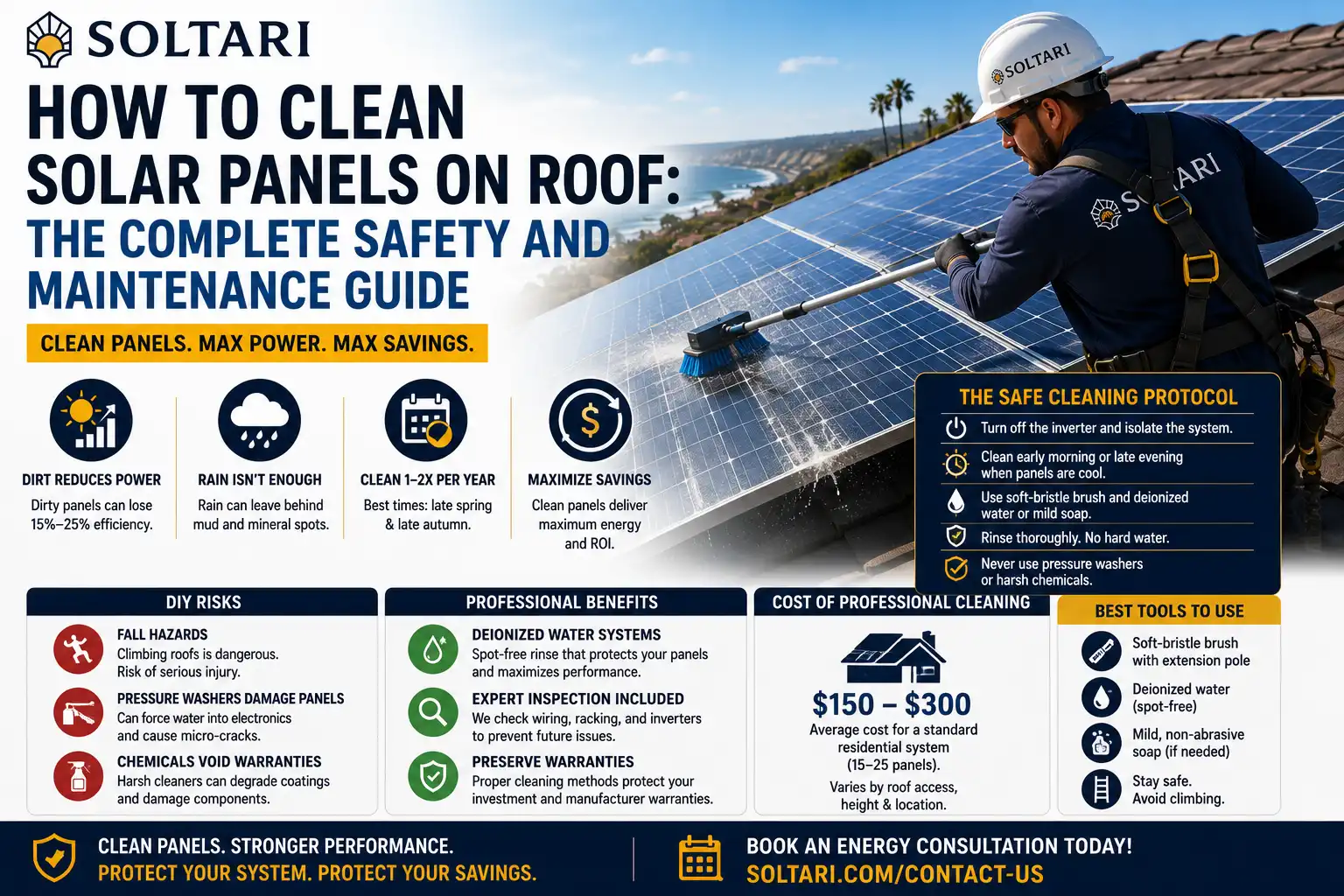
The Efficiency Loss: Research from the National Renewable Energy Laboratory (NREL) shows that dirty panels can experience an efficiency loss of 15% to 25% if not cleaned regularly. In coastal regions or high-dust agricultural zones, this power loss can be even higher, directly impacting your monthly savings.
Does Rain Clean Solar Panels or Do You Need Professional Washing
A common myth among homeowners is that rainfall is sufficient to keep solar panels clean.
-
The Reality: While rain can wash away loose, light dust, it is completely ineffective against sticky substances like bird droppings, baked-on tree sap, or agricultural pollen.
-
The Mud Effect: In dry regions like Central and Northern California, light rain during a summer drought can actually combine with existing dust to create a layer of muddy grime, which bakes onto the glass and reduces efficiency even further. This is why relying on rain alone is not recommended by expert California solar contractors.
How Often Do Solar Panels Need Cleaning for Peak Performance
As a general rule, solar panels should be cleaned once or twice a year.
-
The Optimal Timeline: The best times to clean your panels are in the late spring (to remove winter grime and spring pollen) and the late autumn (to prepare your system for lower winter sunlight).
-
System Diagnostics: If your online monitoring system shows a gradual, unexplained decline in daily power output during sunny days, it is a clear indicator that your system requires a thorough washing.
The Complete Guide on How to Clean Solar Panels Safely
If you decide to wash your panels, following strict electrical and physical safety protocols is critical to prevent system damage or personal injury.
Preparing Your System and Turning Off the Inverter Before Cleaning
You must never spray water on hot solar panels. The thermal shock of cold water hitting glass that has been baking in the California sun can cause the tempered glass to crack, permanently ruining your panels.
-
The Protocol:
-
Perform the cleaning early in the morning or late in the evening when the panels are cool.
-
Completely shut down your solar system and isolate your energy storage backup systems before starting to ensure there is no high-voltage risk.
-
The Best Way to Wash Rooftop Solar Panels Without Causing Damage
To protect the anti-reflective coating on the solar glass, you must use the correct washing technique:
-
The Method: Use a soft-bristle brush attached to an extension pole to gently scrub away dirt. Use clean, deionized water or a mild, non-abrasive soap solution. Always rinse the panels thoroughly with clean water to prevent soap scum or hard-water mineral deposits from drying on the glass, which can create micro-shading.
Essential Tools and Materials to Avoid Scratching the Glass
To avoid voiding your manufacturer’s warranty, never use these damaging tools:
-
NO Wire Brushes or Abrasives: These will permanently scratch the tempered glass, causing permanent shading on the solar cells.
-
NO Chemical Cleaners: Harsh detergents, window cleaners, or bleach can degrade the anti-reflective coating and damage the protective backsheet or wiring underneath.
-
NO Hard Water: Santa Cruz water can be rich in calcium and minerals. Using hard water leaves mineral spots (limescale) on the glass when it evaporates, permanently reducing light absorption.
Professional Solar Maintenance versus Do It Yourself Cleaning
While cleaning your own panels might seem like a simple weekend task, the physical and financial risks are substantial.
Safety Risks of Climbing Steep Roofs for DIY Cleaning
The primary risk of DIY solar cleaning is physical safety.
-
Rooftop Hazards: Climbing onto a steep, two-story roof while handling water, hoses, and wet extension poles is exceptionally high-risk. A single slip can lead to catastrophic personal injury.
-
Rooftop Damage: Walking on your roof incorrectly can break shingles, damage flashing, or put undue structural weight on your premium home solar arrays, resulting in roof leaks that void your home insurance.
Why Chemical Cleaners and Pressure Washers Can Ruin Your Array
Using a high-pressure washer is one of the fastest ways to destroy a solar system:
-
The Danger: High pressure can force water past the water-resistant rubber seals of the junction box and into the electrical connections, causing short circuits or permanent inverter damage. High pressure can also cause micro-cracks in the silicon cells, which are invisible to the naked eye but permanently reduce power output.
The Benefits of Scheduling a Professional Solar Panel Washing Service
Hiring a professional operations and maintenance service is the safest and most efficient choice.
-
Deionized Water Filtration: Professionals use specialized truck-mounted water filtration systems that produce pure, deionized water. This guarantees a spot-free, brilliant shine without using any chemicals.
-
Integrated Inspection: A professional cleaning service (like the one offered by Soltari) includes a comprehensive visual inspection of your racking, wiring, and inverters, identifying potential hazards before they cause system downtime.
Protecting Your Solar System Investment
Why Regular Performance Diagnostics are Key to Long Term Savings
While washing the glass is important, true solar maintenance involves analyzing your online monitoring data. A professional system diagnostic check ensures that every optimizer and microinverter is functioning at peak efficiency, maximizing your return on investment over the system’s 25-year lifespan.
The Soltari Standard of Precision and Craftsmanship
At Soltari, LLC, we follow The Way of the Sun meaning every system we design, install, or maintain is treated with craftsmanship and quiet precision. We integrate maintenance considerations into our initial system design, ensuring that your system is not only easy to clean but engineered for maximum lifetime performance.
Ready to Restore Your System’s Power Output?
Don’t risk climbing a steep roof or voiding your equipment’s warranty with improper cleaning methods. Trust the local team that combines certified electrical expertise with advanced solar operations and maintenance. Book an energy consultation today to get a detailed, professional system diagnostic and a spot-free solar washing quote for your property.
Frequently Asked Questions About Cleaning Solar Panels
Is it bad to leave solar panels dirty?
Yes. Leaving solar panels dirty can reduce your system’s power generation by 15% to 25% due to soiling. Over time, persistent dirt (like bird droppings) can create localized hot spots, which can permanently damage the silicon cells and shorten the lifespan of your panels.
How much does a professional solar panel cleaning service cost?
On average, a professional solar washing service costs between $150 and $300 for a standard residential system (15-25 panels), depending on roof accessibility, height, and local travel distances.
Can I use a pressure washer on my solar panels on a low setting?
No, you should never use a pressure washer on solar panels. Even on low settings, the concentrated pressure can force water into the electrical junction boxes under the panels or cause microscopic cracks in the silicon cells, ruining your system’s efficiency.
Does the Federal Solar Tax Credit cover the cost of cleaning solar panels?
No. The 30% Federal Clean Energy Credit (Section 25D) only covers the installation cost of new solar and battery equipment. General, recurring maintenance services like cleaning and washing are not eligible for the tax credit.
What is the safest way to clean solar panels if I want to do it myself?
The safest way is to clean them from the ground using a high-quality water-fed telescoping pole with a soft brush attachment. This eliminates the risk of climbing onto your roof and ensures you can wash the panels safely.
Why is it important to clean solar panels early in the morning?
Cleaning early in the morning ensures that the panels are cool. Spraying cold water on hot panels during a sunny afternoon can cause thermal shock, which can instantly crack the tempered glass of your panels, voiding your warranty.