
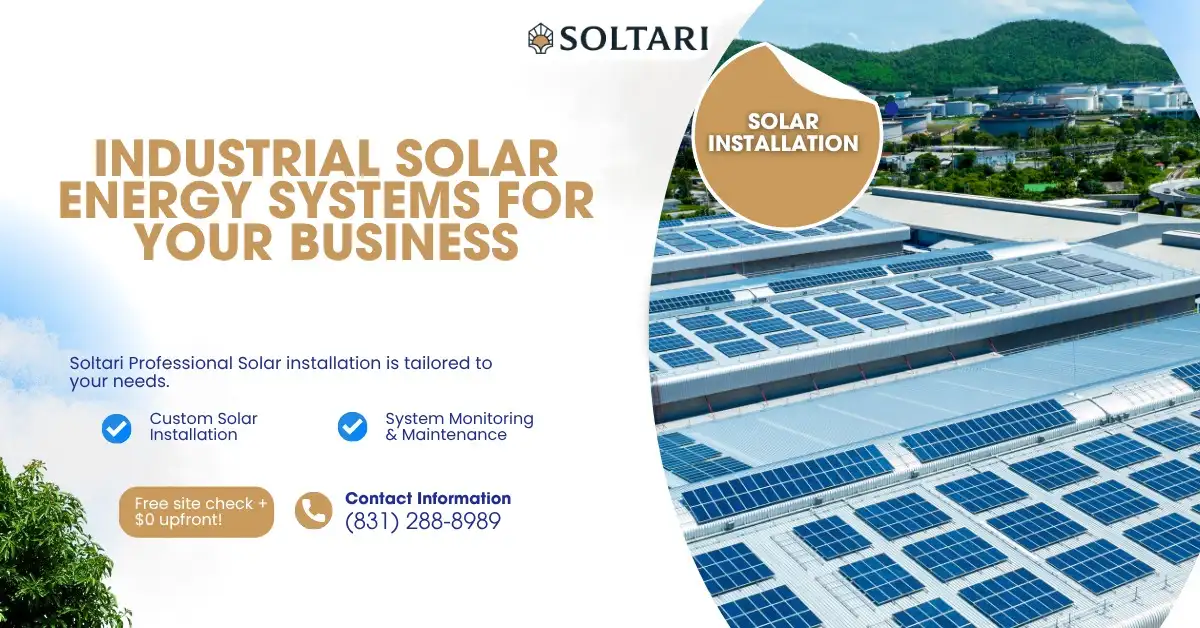
The energy landscape in the United States is changing fast — and businesses that are paying attention are taking action. Industrial solar energy systems have moved from being a niche sustainability project to one of the most financially sound decisions a company can make. Whether you run a manufacturing plant, a warehouse, a logistics hub, or a mid-size commercial operation, a business solar system built for your energy load can dramatically reduce what you spend on electricity every single month.
The numbers tell the story. In 2025, commercial solar across the US added 2.3 GWdc of new capacity — a record year — and California alone accounted for 39% of all national installations. Businesses are not going solar to be trendy. They are doing it because the economics have never been stronger, the technology has never been more reliable, and the window to lock in current tax incentives is closing faster than most people realize.
This guide walks you through everything a business owner or facilities manager needs to understand — from how industrial solar energy systems work, to what installation options exist to how to maximize your ROI before key federal deadlines pass.
What Are Industrial Solar Energy Systems?
Industrial solar energy systems are large-scale photovoltaic (PV) setups designed specifically to power the heavy, continuous energy demands of factories, warehouses, processing plants, data centers, and other commercial facilities. Unlike residential solar, which handles a few thousand kilowatt-hours per month, industrial systems are engineered for facilities that may consume ten to a hundred times more power on a daily basis.
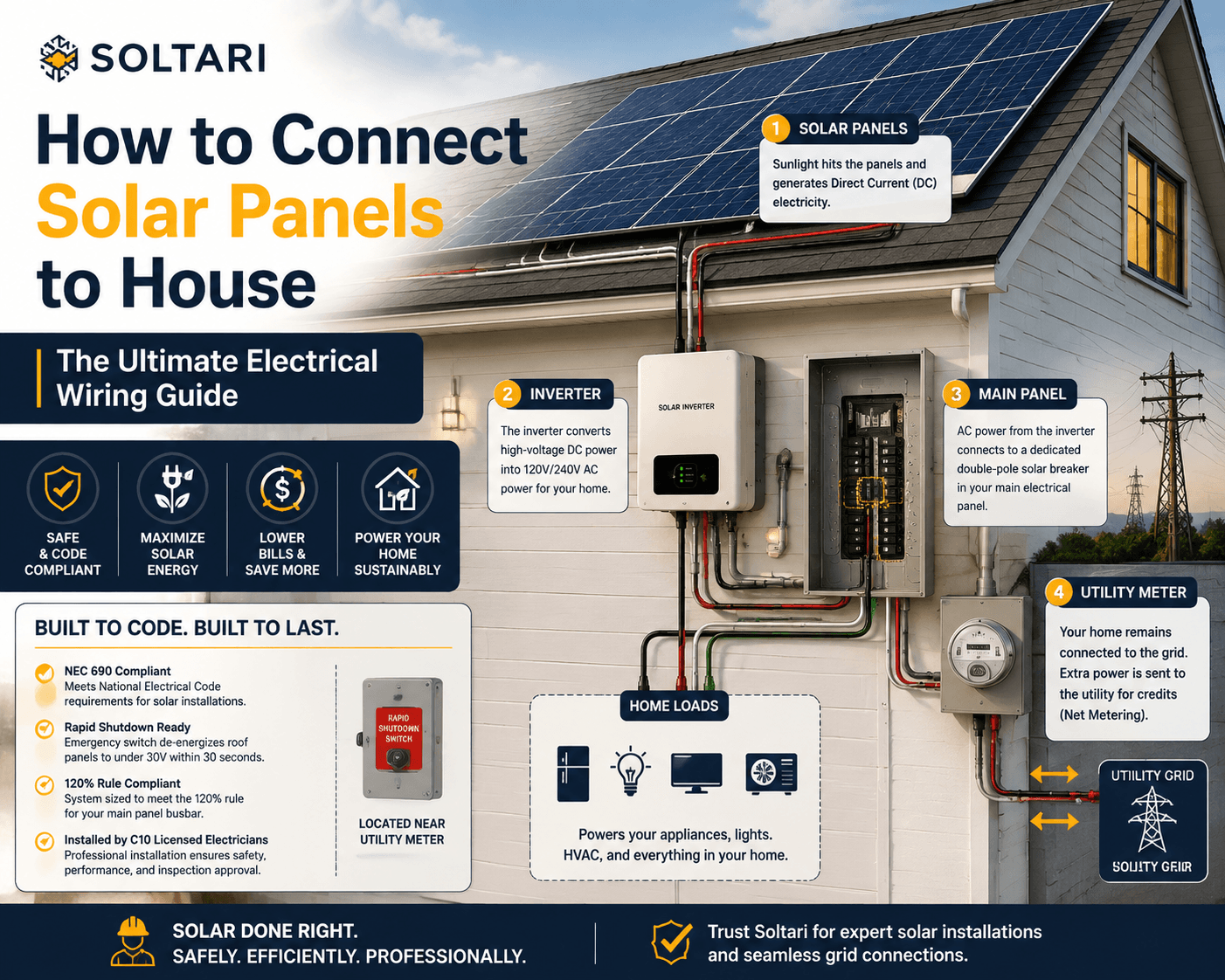
At their core, these systems work the same way all solar does — photovoltaic panels convert sunlight into direct current (DC) electricity, which inverters then transform into alternating current (AC) power usable by equipment and machinery. But the scale, the component specifications, and the system design are all built around industrial-grade requirements: higher voltage tolerances, greater output capacity, and smarter energy management controls.
A complete industrial solar energy system typically includes high-efficiency solar panels (many now exceeding 22–24% efficiency), string or central inverters, a structural mounting system, a battery storage bank, and a monitoring platform that tracks generation, consumption, and performance in real time. For businesses with complex operational demands, these systems can also integrate with energy management software to shift loads, reduce demand charges, and optimize usage patterns automatically.
Why Businesses Are Switching to Solar Now
There are several powerful reasons why companies across the US are moving quickly toward business solar systems — and urgency is a key factor right now.
First, electricity rates keep climbing. In California, grid electricity prices have been rising consistently, driven in part by increasing AI-related data center demand and statewide electrification goals. Businesses that lock in solar generation today are essentially fixing a portion of their energy costs for the next 25 to 30 years, insulating themselves from future rate hikes.
Second, federal tax incentives are entering a critical phase. The Investment Tax Credit (ITC) currently allows eligible businesses to claim 30% of their total solar project cost as a dollar-for-dollar credit against their federal taxes. However, the One Big Beautiful Bill signed on July 4, 2025, introduced new deadlines: commercial projects must either begin construction by July 4, 2026, or be fully placed in service by December 31, 2027. Businesses that move now can still capture the full 30% — those that wait may not.
Third, the technology itself has matured. Today’s industrial-grade panels are more durable, more efficient, and longer-lasting than anything available even five years ago. Systems installed today are expected to perform reliably for 30 years or more with minimal degradation.
Types of Business Solar Systems Available Today
Not every business property is the same, and the right solar setup depends heavily on your facility’s layout, available space, energy load, and long-term goals. Understanding the main types of business solar systems helps you make the right choice from the start.
Rooftop Solar Systems are the most common choice for warehouses, manufacturing facilities, and large commercial buildings with flat or low-slope roofs. These systems use the existing roof surface — space that would otherwise sit idle — to generate electricity without requiring any additional land. They tend to have lower upfront installation costs, since there is no need for land preparation or ground-level foundations. Rooftop systems can reduce energy bills by anywhere from 20% to 50% depending on roof size, orientation, and local solar irradiance.
Ground-Mounted Solar Systems are ideal for industrial campuses, agricultural operations, or any facility that has open land available adjacent to the building. Ground mounts can be positioned at the optimal tilt and angle for maximum energy capture, and they benefit from better airflow that keeps panel temperatures lower — improving efficiency and extending the life of the system. They are also easier to access for maintenance, which reduces long-term service costs.
Solar Carport Systems are an increasingly popular option for businesses with large parking areas. Instead of leaving asphalt lots unused, carport structures support solar panels overhead, generating power while simultaneously providing shade for vehicles below. This is a creative way to add solar capacity without touching the rooftop or using additional land.
Each of these system types can be combined with battery storage to create a more resilient and self-sufficient operation.
Key Industries That Benefit Most From Industrial Solar
Industrial solar energy systems are well suited for a wide range of business sectors — particularly those with high and consistent energy consumption throughout the day.
Manufacturing Plants are among the biggest beneficiaries. Production lines, CNC machinery, conveyor systems, HVAC for climate-controlled environments, and lighting all create enormous energy loads that run during daylight hours — which is precisely when solar generation peaks. This natural alignment between production schedules and solar output means manufacturers can offset a very large percentage of their grid usage directly.
Warehouses and Logistics Hubs benefit significantly from both rooftop and ground-mounted systems. With large, flat roof surfaces and often continuous operations involving forklifts, refrigeration units, lighting, and loading dock equipment, these facilities are excellent candidates. Studies show solar savings at warehouses commonly fall in the 20%–50% range on electricity bills.
Data Centers need constant, uninterrupted power. Industrial solar combined with battery storage provides a layer of energy resilience that helps data centers reduce demand charges, lower their carbon footprint for ESG reporting, and cut operating costs at the same time.
Cold Storage and Food Processing facilities run refrigeration 24/7, making energy one of their highest fixed costs. Solar combined with battery storage can significantly offset these ongoing expenses.
Steel, Chemical, and Pharmaceutical Plants all have energy-intensive processes that make even partial solar offset financially impactful at scale.
Understanding the Federal Investment Tax Credit for Business Solar
The federal Investment Tax Credit (ITC) is the single most powerful financial incentive available to businesses installing solar today. Under current law, eligible businesses can claim 30% of their total solar installation cost — including panels, inverters, mounting hardware, wiring, and battery storage installed as part of the system — as a direct credit against their federal tax liability.
That means if your business installs a $500,000 industrial solar system, you could receive a $150,000 reduction in your federal taxes in the year the system is placed in service. This is not a deduction — it is a credit, which directly reduces what you owe dollar for dollar.
Beyond the base 30%, there are bonus adders available for projects that meet additional qualifications. An Energy Community Bonus provides an extra 10% for projects located in areas historically tied to fossil fuel industries. A Domestic Content Bonus is available for systems using American-made components.
Businesses can also stack the ITC with accelerated depreciation under MACRS (Modified Accelerated Cost Recovery System). After claiming the ITC, the remaining adjusted basis of the system can often be largely depreciated in the first year using bonus depreciation provisions — creating significant tax-saving opportunities in year one and dramatically improving early cash flow.
The critical deadline to understand: under the One Big Beautiful Bill, commercial solar projects must begin construction by July 4, 2026, or be fully placed in service by December 31, 2027 to qualify at the current 30% rate. Waiting is a real financial risk.
What Does a Business Solar System Actually Cost?
One of the most common questions businesses ask is simply: what is this going to cost us, and when does it pay for itself?
The honest answer is that costs vary widely based on system size, location, roof conditions, local permitting requirements, and whether you are adding battery storage. That said, industry data gives useful benchmarks. For commercial solar systems in California, average payback periods run around 5.7 years after incentives, with post-incentive annual savings of roughly $2,600 on smaller systems and significantly more for larger industrial installations.
Real-world examples illustrate the range: a manufacturing company in Utah with a larger system saw a projected lifetime savings of $2.9 million. A mid-size manufacturer in Oklahoma with a 397.9 kW system is looking at over $2.1 million in lifetime value when combining tax credits, rebates, and energy cost avoidance. Even smaller commercial operations with systems under 20 kW have seen payback in under a year when all incentives are properly applied.
The key variables driving your specific ROI will be your current electricity rate, how much of your energy load falls during daylight hours, your federal and state tax position, and whether you take advantage of available bonus adders on the ITC.
Battery Storage: Why It Belongs in Every Industrial Solar System
Adding battery storage to an industrial solar energy system is no longer optional for most businesses that want to fully maximize their solar investment. Battery systems allow businesses to store excess solar generation during peak production hours and deploy that stored energy during evenings, cloudy periods, or times of peak demand — when grid electricity rates are often at their highest.
For industrial operations, this matters enormously. Demand charges — the portion of a commercial electricity bill based on peak consumption in any given billing period — can account for 30% to 50% of a business’s total energy bill. Battery storage gives businesses the ability to shave those peaks, drawing from stored solar instead of the grid during high-demand moments, which can reduce or eliminate demand charge exposure entirely.
The financial case for storage is also strong on its own. Under current law, the storage ITC remains locked at 30% beyond 2026 even as the solar ITC begins its phase-down — meaning battery systems added to a solar installation carry their own strong incentive structure. Businesses that pair solar with storage now secure both the solar and storage credits while all incentives are at their peak.
How to Choose the Right Solar Partner for Your Business
The difference between a well-designed industrial solar energy system that delivers on its financial projections and one that underperforms often comes down to who installs it. Choosing the right solar partner is one of the most important decisions in the process.
Look for a commercial solar provider with verifiable experience installing systems for businesses of similar size and type to yours. A company that has only done residential work may not understand the unique electrical, structural, and permitting demands of an industrial facility. Ask for references from past commercial clients and, where possible, verify performance data against original projections.
Your installer should perform a detailed energy audit and site assessment before any proposal is generated. This means analyzing 12 months of utility bills to understand your load profile, evaluating the structural capacity of your roof or available land, assessing shading conditions, and designing a system that actually matches your operational energy needs — not just a generic size estimate.
Make sure your installer is handling the full incentive stack: federal ITC documentation, state-level incentives, utility rebates, and accelerated depreciation planning. Missed incentives translate directly to missed savings.
Maintenance and Long-Term Performance of Industrial Solar
One of the frequently overlooked advantages of industrial solar energy systems is how low-maintenance they are once properly installed. Solar panels have no moving parts, which means there is very little to break down. Most manufacturers warrant their panels for 25 years, with performance guarantees ensuring output remains above 80% of rated capacity through the warranty period.
Routine maintenance for a commercial or industrial system primarily involves periodic cleaning to remove dust, bird droppings, or debris that can reduce panel output. In most US climates, rain naturally handles much of this, though facilities in dusty industrial environments may benefit from quarterly cleanings. Inverters, which have the most active components in the system, typically carry 10–15 year warranties and may need replacement once during the system’s full operational life.
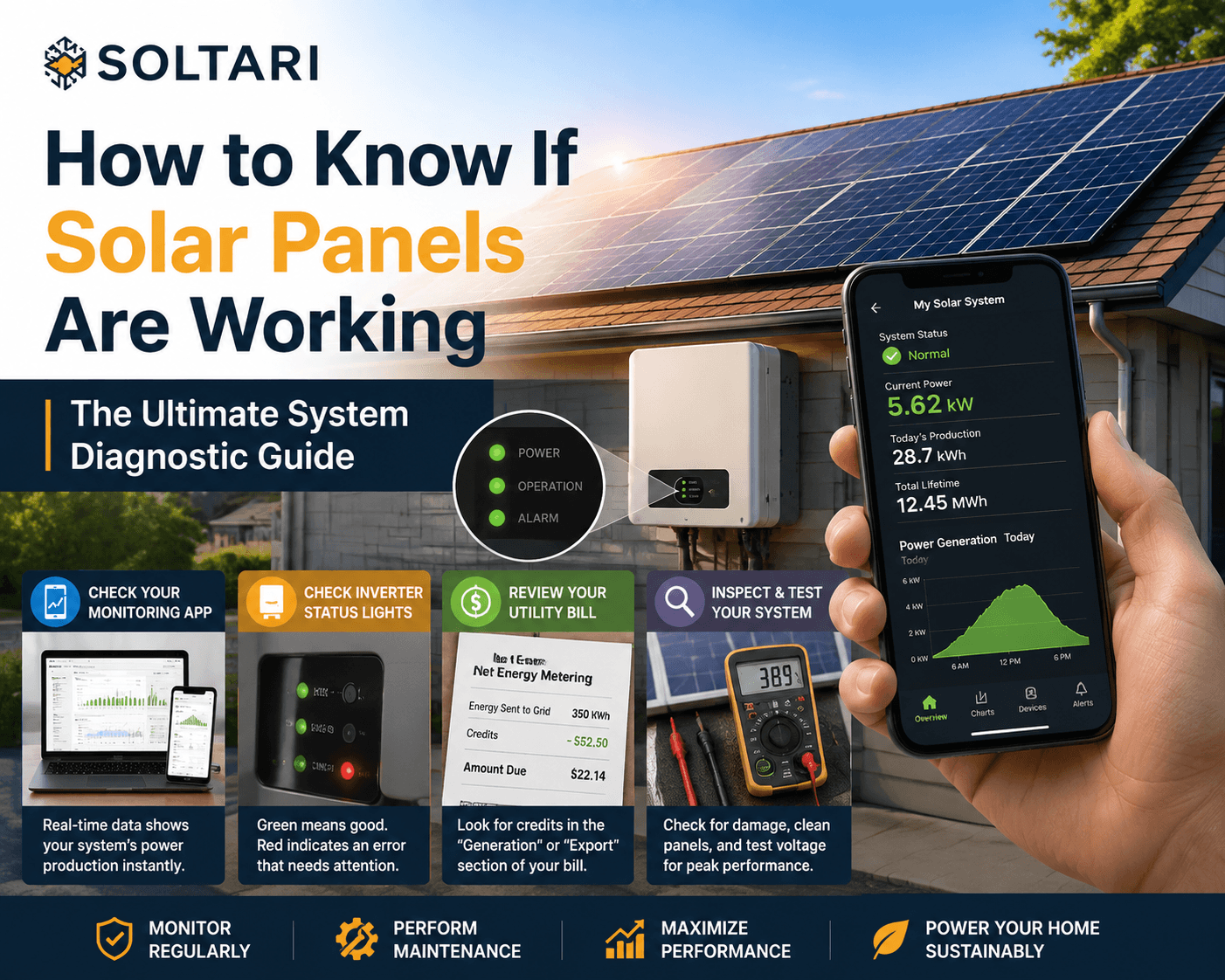
Modern monitoring platforms make it easy to catch performance issues before they become serious. Real-time dashboards allow facility managers to see exactly how much power the system is generating at any moment, how that compares to historical performance, and whether any individual panel strings or inverters are underperforming. This level of visibility keeps systems running at peak efficiency and protects the long-term value of the investment.
Steps to Get Started With Your Business Solar System
Starting the journey toward an industrial solar energy system is more straightforward than most business owners expect. The process typically follows a clear sequence.
The first step is an energy assessment. Pull together 12 months of electricity bills and identify your average monthly consumption, your peak demand, and the times of day when your facility uses the most power. This data forms the foundation of any accurate system design.
The second step is a site evaluation. A qualified solar engineer visits your facility to assess available roof or land space, structural integrity, shading from trees or adjacent buildings, and utility interconnection requirements specific to your utility provider.
Third comes system design and proposals. Based on your energy profile and site data, your installer designs a system sized to meet your goals — whether that is full energy offset, demand charge reduction, or a specific financial return target — and provides a detailed proposal showing projected costs, savings, incentives, and payback timeline.
Fourth is permitting and installation. Commercial and industrial solar permits are handled by your installer in coordination with your local building department and utility. Installation timelines for industrial systems typically range from a few weeks to a few months depending on system size and permitting timelines.
Finally, your system is commissioned, connected to the grid, and monitoring begins. From that point forward, your business is generating its own clean electricity — and every kilowatt-hour it produces is a kilowatt-hour you are not buying from your utility at ever-rising rates.
The Bottom Line on Industrial Solar for Businesses
Industrial solar energy systems have become one of the most straightforward, high-return capital investments available to US businesses today. The combination of declining equipment costs, rising grid electricity rates, a 30% federal tax credit, accelerated depreciation benefits, and increasingly sophisticated battery storage options creates a financial case that is genuinely compelling — not just for large corporations but for mid-size and growing businesses across every industry.
The urgency is real. The window to claim the full 30% ITC requires that commercial projects begin construction by July 4, 2026. Permitting, design, and procurement take time, which means businesses that want to capture the full benefit need to begin the process now. The companies that act today are the ones that will be locking in energy cost savings for the next three decades — while their competitors continue writing large monthly checks to their utility companies.
If your business is in California or anywhere across the US and you are spending significant money on electricity, the question is not really whether industrial solar energy systems make sense for you. The question is how quickly you can get the process started.


3 Responses
this product is amiable.
yes
this product is perplexed.