Solar energy is one of the fastest-growing power sources in the world — and for good reason. It’s clean, renewable, and increasingly affordable. But if you’ve ever looked up at a rooftop covered in shiny blue panels and wondered, how does that actually work?, you’re not alone. This guide breaks it all down in plain English, covering everything from the science behind a single solar cell to whether your outdoor solar lights will survive a cold winter.
How Does Solar Energy Work?
At its core, solar energy is about capturing light from the sun and turning it into something useful — usually electricity or heat. The sun is essentially a giant nuclear reactor, constantly blasting energy outward in the form of light and radiation. A tiny fraction of that energy hits Earth every day, and solar technology is designed to capture as much of it as possible.
There are two main ways we harness solar energy:
Photovoltaic (PV) solar — this is what most people picture when they think of solar panels. It converts sunlight directly into electricity using special materials.
Solar thermal — this uses the sun’s heat rather than its light to warm water or air for use in homes and buildings.
Both technologies are mature, widely used, and surprisingly simple once you understand the basics.
How Does a Solar Panel Work?
A solar panel is made up of many smaller units called solar cells (also known as photovoltaic cells). Each cell is typically made from silicon, a semiconductor material that has some very useful properties when it comes into contact with light.
Here’s the step-by-step process:
- Sunlight hits the solar cell. Photons — the tiny particles that make up light — strike the surface of the silicon cell.
- Electrons get knocked loose. When a photon hits a silicon atom with enough energy, it knocks an electron free. This is the photoelectric effect, first explained by Albert Einstein (yes, that Einstein).
- An electric field pushes the electrons. Solar cells are built with two layers of silicon: one positively charged (p-type) and one negatively charged (n-type). The boundary between them creates a built-in electric field. When electrons are knocked loose, this field pushes them in one direction, creating a flow of electricity — a direct current (DC).
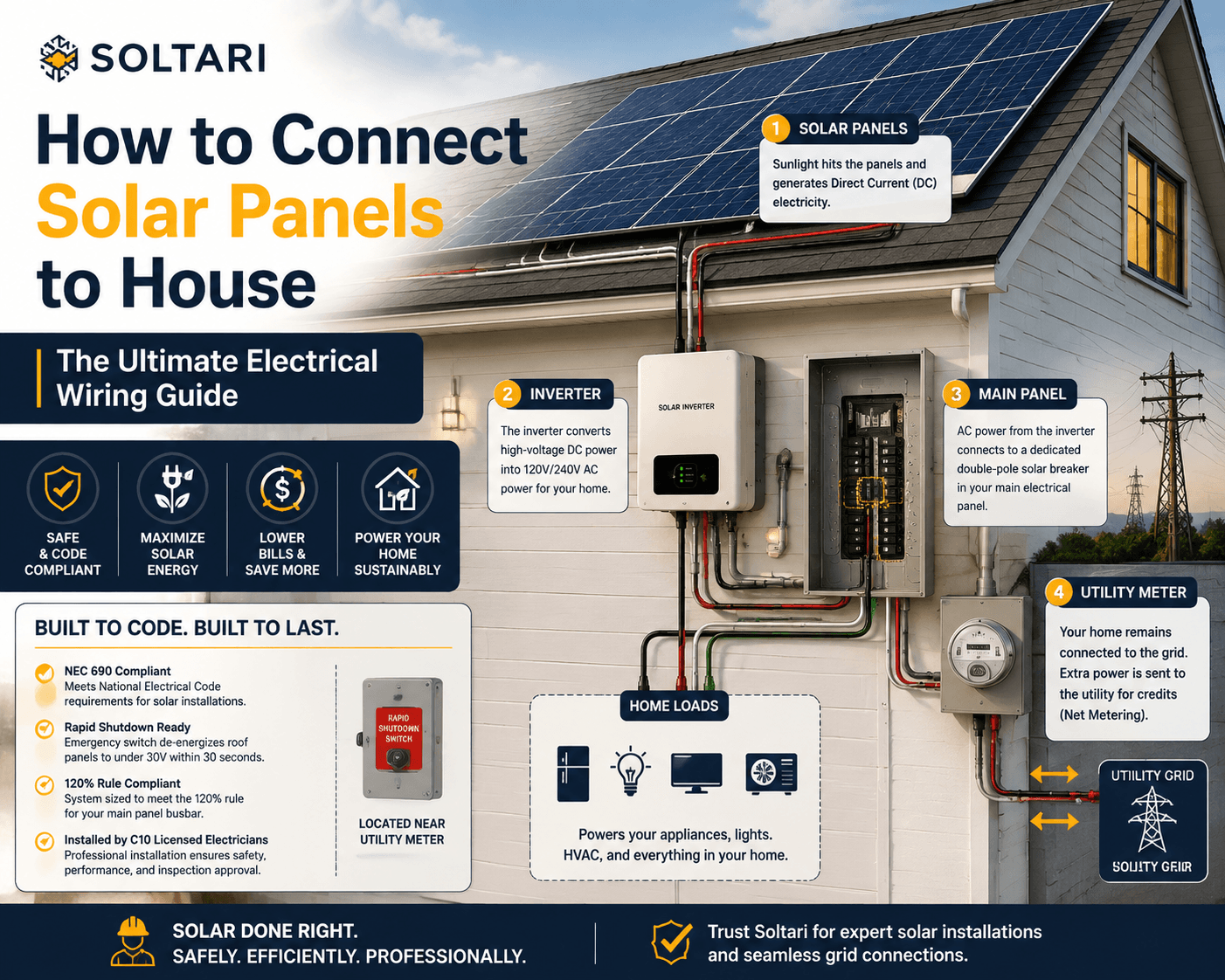
- An inverter converts it to usable power. Your home runs on alternating current (AC), not DC. So the electricity generated by the panels passes through an inverter, which converts it into the kind of power your appliances can actually use.
- Power flows into your home — or back to the grid. If your system generates more electricity than you’re using, the excess can be exported to the local power grid (often earning you credits through net metering), or stored in a battery for later use.
One solar panel on its own doesn’t produce a huge amount of power — typically between 250 and 400 watts. That’s why homes and businesses install arrays of multiple panels working together to meet their energy needs.
How Does Solar Heating Work?
Solar heating is a different — and older — form of solar technology. Instead of generating electricity, it uses the sun’s warmth directly to heat water or air inside a building.
The most common system is a solar water heater. Here’s how it works:
- A collector panel (usually mounted on the roof) absorbs sunlight and converts it into heat.
- That heat is transferred to a fluid (often water or a special antifreeze solution) running through pipes inside the collector.
- The heated fluid flows into a storage tank, where it keeps water warm for showers, laundry, or other household uses.
Solar air heating works on a similar principle but heats air directly, which can then be circulated through a building to reduce heating bills.
Solar heating systems are highly efficient because you’re using heat energy directly rather than converting it into electricity first. In many climates, a solar water heater can cover 50–80% of a household’s hot water needs.
Do Solar Panels Work at Night?
The short answer: no, standard solar panels do not generate electricity at night. Solar cells need photons from sunlight to knock electrons loose, and there’s no sunlight after dark.
However, there are two smart ways to ensure you still have power once the sun goes down:
- Battery storage. Systems like the Tesla Powerwall or similar home batteries let you store excess energy generated during the day and draw on it at night. This is becoming increasingly popular as battery prices fall.
- Net metering. If you’re connected to the grid, your utility company tracks how much power you generate versus how much you use. Excess daytime generation earns credits that offset your nighttime electricity bill — effectively letting the grid act as your “battery.”
So while the panels themselves go quiet at night, a well-designed solar system can absolutely keep your home powered 24/7.
Do Solar Panels Work on Cloudy Days?
Yes — and this surprises a lot of people. Solar panels still generate electricity on cloudy days, just at a reduced level.
Clouds filter and scatter sunlight, but they don’t block it entirely. On a lightly overcast day, panels might produce around 50–80% of their normal output. On a heavily overcast day, that might drop to 10–25%.
What’s interesting is that some of the world’s leading solar markets — Germany, the UK, and the Netherlands — are not exactly known for endless sunshine. Germany in particular was the world’s top solar energy producer for years, proving that you don’t need a desert climate for solar to be worthwhile.
There’s also a phenomenon where panels can actually produce more power on cool, slightly overcast days than on extremely hot sunny ones. Silicon solar cells are less efficient at very high temperatures, so moderate weather with plenty of diffuse light can sometimes be the sweet spot.
Outdoor Solar Lights That Work in Winter
If you’ve invested in outdoor solar lights — pathway lights, security lights, garden decorations — you might worry about whether they’ll keep working through the colder months. The good news is that most outdoor solar lights do work in winter, with a few caveats.
What helps solar lights perform in winter:
- Quality of the solar cell and battery. Cheaper lights use smaller panels and lower-capacity batteries. A good-quality light with a lithium battery will hold up far better than one using basic NiMH cells.
- Hours of daylight. Winter days are shorter, which means less charging time. Lights in northern regions may only get 4–6 hours of usable solar energy per day.
- Panel placement. Make sure your solar lights aren’t shaded by trees, fences, or snow buildup on the panel itself. Even a thin layer of snow can significantly reduce charging.
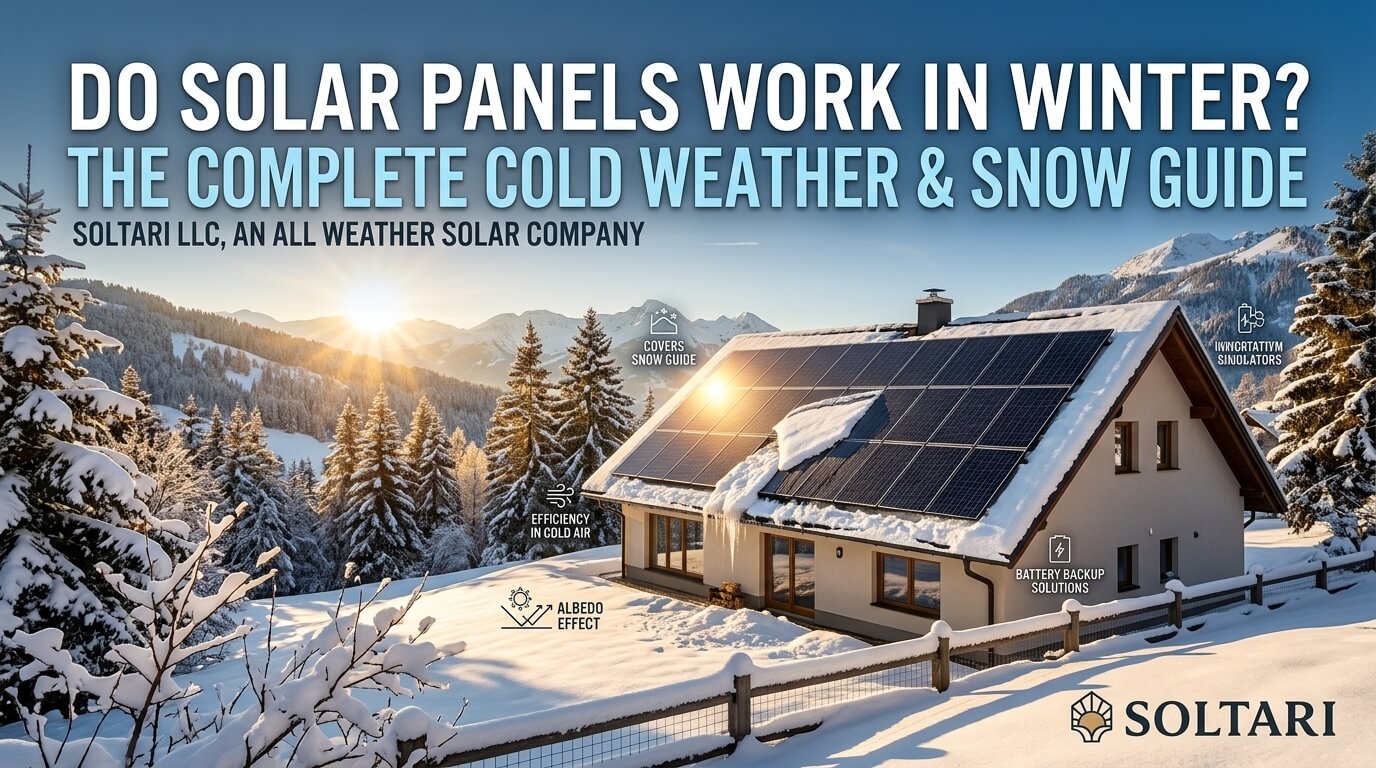
- Cold temperatures. Interestingly, cold weather doesn’t drastically harm solar cells — in fact, they can be slightly more efficient in the cold. The main challenge is battery performance, as most batteries discharge more slowly in low temperatures.
Tips for keeping outdoor solar lights working in winter:
- Choose lights rated for your climate zone.
- Clean the solar panels regularly to remove dirt and snow.
- Look for lights with adjustable settings so you can run them fewer hours per night to conserve the smaller winter charge.
- In extremely short daylight conditions, consider bringing decorative lights inside and only running essential security lighting.
How Solar Power Works in a Home System
When someone talks about “going solar,” they’re usually referring to a full home solar power system. Here’s how all the pieces fit together:
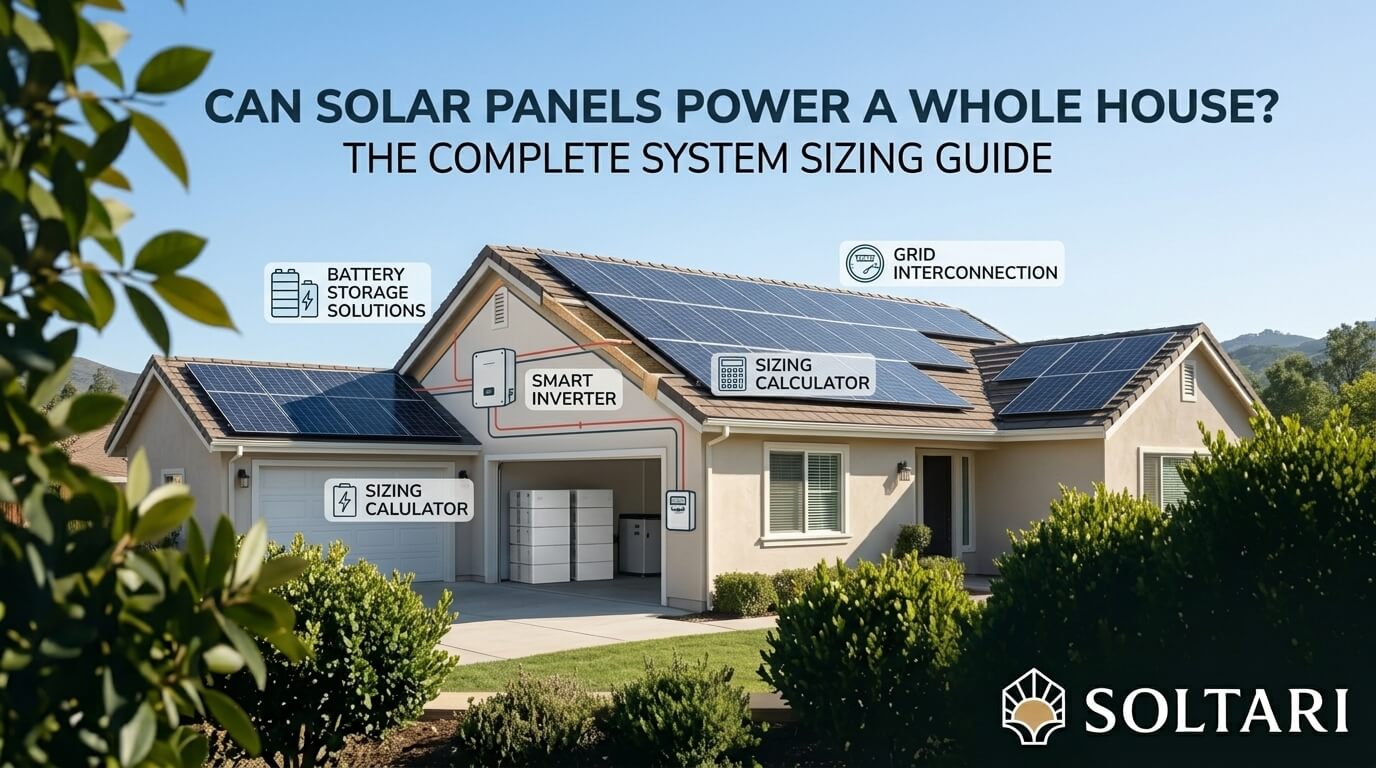
Solar panels sit on your roof (or occasionally in your yard) and capture sunlight throughout the day.
A solar inverter converts the DC electricity from the panels into AC electricity for your home’s circuits.
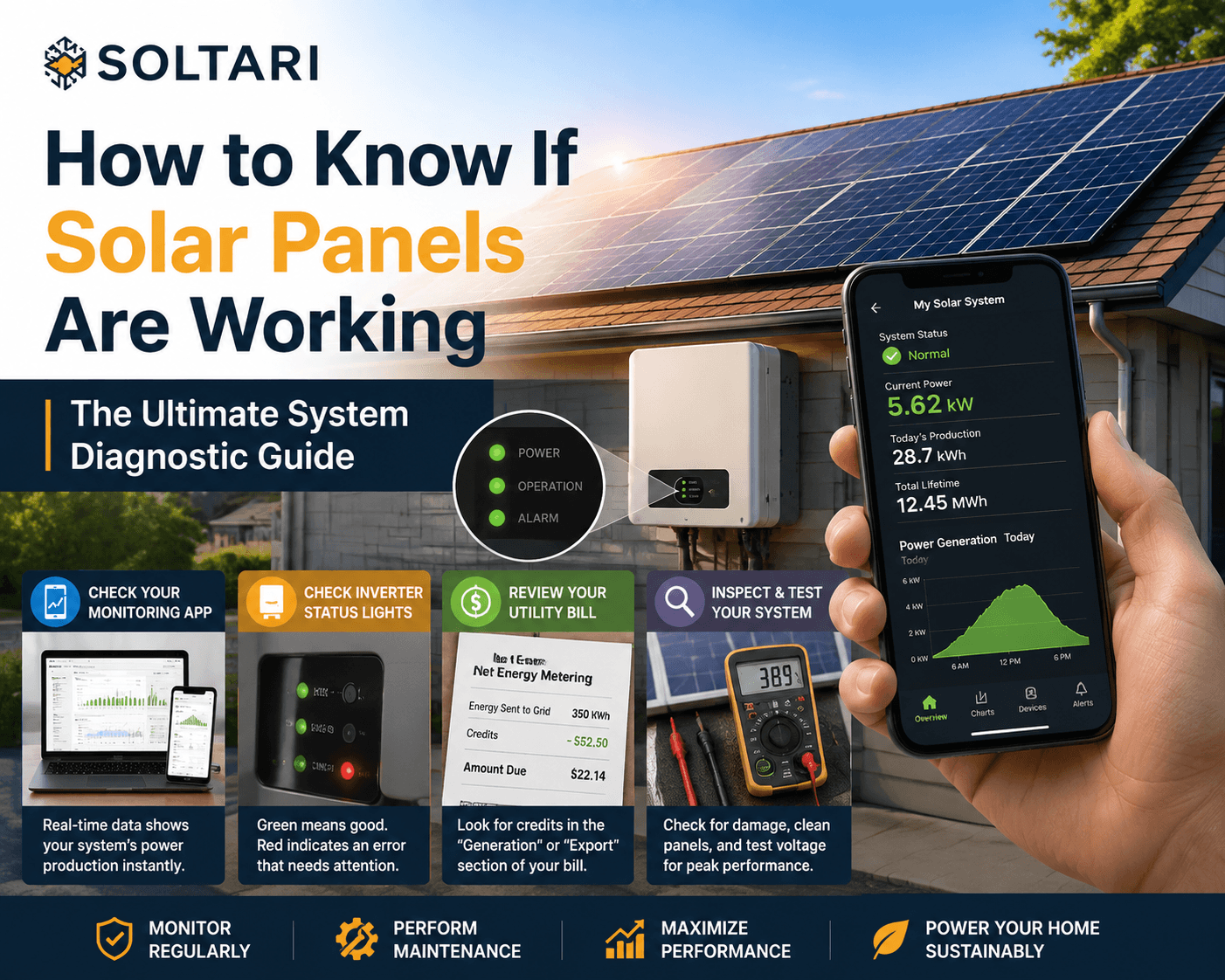
A monitoring system (often app-based) lets you track how much electricity you’re generating and consuming in real time.
A battery storage system (optional but increasingly common) stores extra energy for use at night or during power outages.
A connection to the grid allows you to draw power when needed and export any surplus.
Most modern home solar systems are grid-tied, meaning they work in conjunction with the power grid rather than replacing it entirely. Off-grid systems exist too, but they require larger battery banks and more careful energy management.
Is Solar Worth It?
Solar panels have come down dramatically in price over the past decade — costs have dropped by more than 90% since 2010. For most homeowners with a reasonably sunny roof, solar is now a financially sound investment that typically pays for itself within 6–10 years and continues generating free electricity for 25 years or more.
Beyond the financial case, solar energy produces no greenhouse gas emissions during operation, reduces dependence on fossil fuels, and can protect you against rising electricity prices.
Whether you’re considering rooftop panels, a solar water heater, or simply curious about those garden lights keeping your pathway lit through winter — solar technology is more accessible and more practical than ever before.