
What Is Renewable Energy?
Energy is the backbone of modern life — it powers our homes, fuels our economy, and connects our communities. But not all energy is created equal, and the source it comes from makes all the difference in terms of sustainability, cost, and environmental impact.
Renewable energy is energy derived from natural sources that replenish themselves continuously over time. Unlike fuels that took millions of years to form underground, renewable energy sources are constantly being restored by nature — the sun rises every morning, wind keeps blowing, rivers keep flowing, and the earth keeps generating heat from its core. These sources won’t run out in any meaningful human timeframe, which is exactly what makes them so valuable as the world looks to build a cleaner, more reliable energy future.
In the United States, renewable energy has grown from a niche alternative into a mainstream power source. According to the US Energy Information Administration (EIA), renewables accounted for about 21 percent of total US electricity generation in 2023 — and that share is growing every year. Solar and wind alone have expanded faster than almost any other energy technology in history, driven by falling costs, supportive federal policy, and genuine public demand for cleaner power.
Understanding what renewable energy is — and how it compares to the alternatives — is the starting point for making sense of the energy conversation happening across America right now.
Explain Non Renewable Energy
To fully appreciate renewable energy, it helps to understand what it’s up against.
Non renewable energy comes from sources that exist in finite quantities and cannot be replenished on any human timescale. Fossil fuels — coal, oil, and natural gas — are the dominant examples. These fuels formed over hundreds of millions of years as ancient organic matter was compressed under heat and pressure deep in the earth. Once burned for energy, they’re gone. There’s no way to make more coal in a generation, a century, or even a millennium.
Nuclear energy occupies an interesting middle ground. Uranium, the fuel used in nuclear reactors, is also a finite resource extracted from the earth. Most energy classification systems define it as non renewable because the fuel source is depletable, even though nuclear power plants produce no direct carbon emissions during operation.
The core problem with non renewable energy sources isn’t just that they’ll eventually run out — it’s the consequences of using them at scale. Burning fossil fuels releases carbon dioxide and other greenhouse gases that drive climate change. Extraction causes habitat disruption, water contamination, and community health impacts. Price volatility tied to global markets creates economic instability. The United States spent decades heavily dependent on imported oil, with real consequences for national security and household budgets.
Defining non renewable energy resources this way makes the contrast with renewables sharp and clear: one set of sources is finite, polluting, and increasingly costly to extract — the other is inexhaustible, increasingly affordable, and getting cleaner every year.
Renewable Energy and Nonrenewable Energy Sources — How They Compare
Putting renewable and nonrenewable energy sources side by side reveals a picture that has shifted dramatically over the past two decades.
Cost. Renewable energy — particularly solar and wind — has become the cheapest form of new electricity generation in most of the United States. The cost of utility-scale solar has dropped by more than 90 percent since 2010. Natural gas remains competitive, but coal is struggling to compete economically even without carbon pricing factored in.
Reliability. This is where nonrenewable sources have traditionally held an advantage. Coal and gas plants generate power on demand regardless of weather. Renewables are intermittent — solar doesn’t produce at night, wind doesn’t blow constantly. However, advances in renewable energy storage, grid management, and geographic diversification are rapidly narrowing this gap.
Environmental impact. Fossil fuels produce greenhouse gas emissions, air pollution, and significant land and water use impacts. Renewable energy sources have dramatically lower lifecycle emissions and a far smaller environmental footprint once operational.
Energy security. Domestic renewable resources — American sun, American wind, American geothermal heat — can’t be embargoed or subject to foreign price manipulation the way imported oil and gas can. This energy independence argument resonates strongly across the political spectrum in the US.
Jobs and economy. The US Bureau of Labor Statistics consistently ranks solar photovoltaic installer and wind turbine technician among the fastest-growing jobs in the country. The renewable energy sector is creating durable, local employment across rural and urban communities alike.
The comparison isn’t about declaring one side a winner overnight. Natural gas in particular still plays an important role in balancing the US grid. But the trajectory is unmistakable — renewables are gaining ground on every meaningful measure.
Types of Renewable Energy
The renewable energy landscape is more diverse than most people realize. It’s not just solar panels and wind turbines — though those two technologies are certainly leading the charge. Here’s a grounded look at the main types of renewable energy powering the US and the world today.
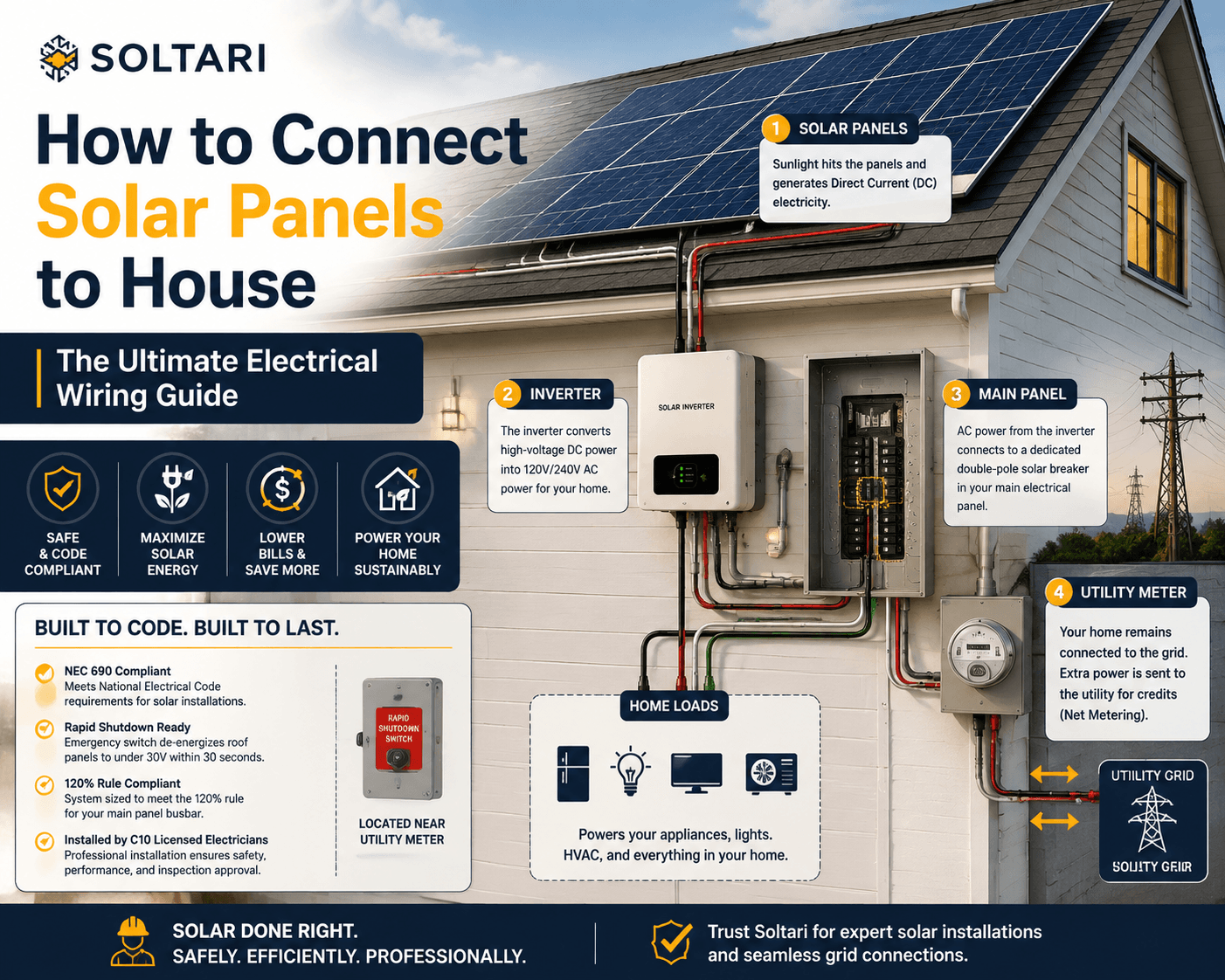
Solar Energy. Photovoltaic (PV) panels convert sunlight directly into electricity. Concentrated solar power (CSP) systems use mirrors to focus sunlight and generate heat that drives turbines. Solar is now the fastest-growing electricity source in the US, with installations on rooftops, in deserts, and increasingly on agricultural land through agrivoltaic projects.
Wind Energy. Wind turbines convert the kinetic energy of moving air into electricity. The US has enormous wind resources, particularly in the Great Plains states — Texas, Kansas, Oklahoma, Iowa — and offshore along the Atlantic Coast. Offshore wind is growing rapidly and represents a massive untapped resource for East Coast states.
Hydropower. The oldest and still largest source of renewable electricity in the US, hydropower uses moving water — rivers and reservoirs — to spin turbines. The Pacific Northwest, particularly Washington and Oregon, gets a large share of its electricity from hydropower. Small-scale and run-of-river hydro are also gaining attention as lower-impact alternatives to large dams.
Geothermal Energy. This type uses heat from the earth’s interior — volcanic activity, natural underground hot water, or deep rock heat — to generate electricity or provide direct heating. The western US, particularly Nevada, California, and Idaho, has the richest geothermal resources in the country.
Biomass and Bioenergy. Organic material — wood waste, agricultural residue, dedicated energy crops, landfill gas — can be burned or converted to generate electricity, heat, or liquid fuels. Biomass is considered renewable because the carbon it releases was recently absorbed from the atmosphere, unlike fossil fuels.
Tidal and Wave Energy. Still largely in development, ocean energy technologies harness the movement of tides and waves. The US coastline and offshore territories hold significant long-term potential, though commercial-scale deployment is still years away for most applications.
Each of these types of renewable energy has a role to play in a diversified clean energy system — and the right mix looks different for every region of the country.
Is Geothermal Energy Renewable?
Yes — geothermal energy is absolutely a renewable energy source, and it’s one that deserves far more attention than it typically gets in mainstream energy conversations.
Geothermal energy taps into heat generated within the earth’s core through radioactive decay and residual heat from the planet’s formation. This heat has been flowing toward the surface for billions of years and will continue doing so for billions more. On any human timescale, that’s as inexhaustible as it gets.
In the western United States, where tectonic activity brings geothermal heat closer to the surface, geothermal power plants have been operating reliably for decades. The Geysers complex in northern California is the largest geothermal installation in the world, producing enough electricity for hundreds of thousands of homes. Nevada gets more of its electricity from geothermal energy than any other state, and Idaho has long used geothermal heat for direct heating applications.
What makes geothermal particularly attractive compared to solar and wind is that it operates continuously — 24 hours a day, 7 days a week, regardless of weather or time of day. A geothermal power plant has a capacity factor (actual output versus theoretical maximum) of around 90 percent, compared to roughly 25 percent for solar and 35 percent for wind. That makes it one of the most reliable forms of renewable energy available.
Emerging technologies like enhanced geothermal systems (EGS) aim to unlock geothermal energy in regions without natural hydrothermal resources, which could eventually make it viable across much more of the US. Companies in Texas, Utah, and even the Midwest are actively developing these systems right now.
Is Sun Energy Renewable?
Absolutely — solar energy is one of the clearest examples of a renewable resource on earth.
The sun has been fusing hydrogen into helium and radiating energy for about 4.6 billion years. Scientists estimate it has roughly another 5 billion years of fuel remaining. For all practical purposes — for human civilization, for our energy planning, for the lifespans of any solar panel ever manufactured — sun energy is an infinite, constantly replenishing source.
Every hour, more solar energy reaches the earth’s surface than humanity uses in an entire year. The challenge has never been the availability of sun energy — it’s been the cost and efficiency of capturing it. That challenge has been largely solved over the past decade.
In the US, solar energy has gone from a curiosity to a cornerstone of the electricity system. Utility-scale solar farms in the Southwest generate power at costs competitive with any fossil fuel. Rooftop solar panels on American homes and businesses now number in the millions. Community solar programs are extending access to renters and households that can’t install panels on their own roofs.
Sun energy is also uniquely democratic in its distribution. Every state in the US — even cloudy ones — receives enough sunlight to make solar power viable. The sunny Southwest simply gets more of it, but New England, the Pacific Northwest, and the Upper Midwest all have thriving solar markets because even diffuse daylight produces meaningful electricity through modern PV technology.
Example of Renewable and Non Renewable Energy
Sometimes the clearest way to understand an idea is through concrete, real-world examples. Here’s a side-by-side look at renewable and nonrenewable energy in everyday American life.
Examples of renewable energy in use:
- A rooftop solar panel system on a home in Phoenix, Arizona generating electricity from sunlight
- A wind farm in the Texas Panhandle powering thousands of homes around the clock
- The Hoover Dam on the Colorado River producing hydroelectric power for Nevada, Arizona, and California
- A geothermal heating system beneath a Boise, Idaho neighborhood providing direct heat from underground hot water
- A biomass plant in the rural Southeast converting wood waste into electricity
Examples of non renewable energy in use:
- A natural gas power plant in Houston, Texas generating electricity on demand for the ERCOT grid
- A coal-fired power plant in Wyoming supplying baseload power to regional utilities
- Gasoline refined from crude oil powering the 280 million registered vehicles on American roads
- Propane sourced from natural gas processing heating rural homes across the Midwest and Appalachia
- A nuclear power plant in Illinois generating zero-carbon but non-renewable electricity for millions of homes
These examples of renewable and non renewable energy show that both are deeply embedded in American daily life right now. The transition isn’t a switch that flips overnight — it’s a gradual shift in the mix, driven by economics, policy, technology, and consumer choice. But the direction of that shift is clear.
Renewable Energy Storage
One of the most important — and most misunderstood — topics in the renewable energy conversation is storage. Critics of solar and wind often point to intermittency as a fatal flaw: the sun doesn’t always shine, the wind doesn’t always blow. Renewable energy storage is the answer to that challenge, and it’s advancing faster than most people realize.
Battery storage is the most visible and fastest-growing form of renewable energy storage in the US. Lithium-ion battery systems — the same basic chemistry in your phone or electric vehicle, scaled up dramatically — are being deployed at the grid level and at individual homes and businesses. California, Texas, and Florida are leading in grid-scale battery storage deployments. Home battery systems like the Tesla Powerwall, Enphase IQ Battery, and Franklin WH allow homeowners to store solar energy during the day and use it at night or during outages.
Pumped hydropower storage is actually the largest form of energy storage in the US by capacity — it works by pumping water uphill to a reservoir when electricity is cheap and abundant, then releasing it through turbines when power is needed. It’s essentially a giant rechargeable battery using gravity and water.
Thermal storage captures excess energy as heat or cold — molten salt systems at concentrated solar plants store heat to generate electricity after sunset, while ice-based cooling systems shift electricity demand away from peak hours.
Hydrogen is emerging as a long-duration storage solution. Excess renewable electricity can be used to produce green hydrogen through electrolysis, which can then be stored and used to generate power during extended low-generation periods — a potential solution for seasonal storage challenges.
The rapid cost decline in battery storage is mirroring what happened with solar panels a decade ago. Grid-scale storage costs have fallen by over 70 percent in the past decade, and the trajectory continues downward. As storage scales up, the intermittency argument against renewables weakens significantly.
Benefits of Renewable Energy
The case for renewable energy in the United States is built on a foundation of overlapping, reinforcing benefits that touch the economy, public health, national security, and the environment simultaneously.
Lower and more stable energy costs. Once a solar farm or wind project is built, the fuel is free. Operating costs are predictable. Consumers benefit from electricity prices that aren’t subject to the price spikes that follow oil supply disruptions or natural gas market volatility. Long-term power purchase agreements for renewable energy lock in stable prices for decades.
Job creation and economic development. The US renewable energy sector employed over 900,000 Americans in 2023 across manufacturing, installation, operations, and maintenance. These jobs are spread across all 50 states, with particularly strong growth in states like Texas, California, Florida, and the Midwest. Many of these positions are skilled, well-paying, and local — they can’t be outsourced.
Improved public health. Air pollution from burning fossil fuels contributes to respiratory illness, cardiovascular disease, and premature death across the United States. The American Lung Association and EPA have documented the health costs of fossil fuel combustion for decades. Replacing coal and gas generation with clean renewable energy directly reduces these health burdens — and the associated healthcare costs.
Climate and environmental benefits. Renewable energy produces little to no greenhouse gas emissions during operation. Expanding renewables is central to the United States meeting its climate commitments and reducing the long-term risks of extreme weather, sea level rise, drought, and wildfire — all of which carry enormous economic costs.
Energy independence and national security. Domestic renewable resources cannot be embargoed, sanctioned, or disrupted by foreign governments. A US energy system powered increasingly by American sun, wind, water, and geothermal heat is a more secure one — a point with bipartisan appeal in Washington.
Grid resilience. A distributed renewable energy system — with generation spread across thousands of solar farms, wind projects, and rooftop systems — is inherently more resilient than one dependent on a handful of large, centralized fossil fuel plants. When one part of a distributed system fails, the rest keeps running.
The benefits of renewable energy aren’t theoretical — they’re being realized in real communities, on real utility bills, and in real public health outcomes across America right now.
Define Non Renewable Energy Resources
To close the loop on the comparison that runs through this entire discussion, it’s worth offering a precise definition.
Non renewable energy resources are naturally occurring energy sources that exist in fixed quantities within the earth and are consumed far faster than any natural process can regenerate them. The defining characteristic is depletion — once used, they cannot be meaningfully replenished on any timescale relevant to human civilization.
The primary non renewable energy resources are:
- Coal — formed from ancient plant matter over 300 million years; the most carbon-intensive fossil fuel and a significant source of air pollution
- Crude oil (petroleum) — the source of gasoline, diesel, jet fuel, and many petrochemicals; extracted from underground reservoirs formed over millions of years
- Natural gas — primarily methane, often found alongside oil deposits; cleaner-burning than coal but still a significant source of greenhouse gas emissions including methane leakage during extraction and transport
- Uranium — the fuel for nuclear fission; mined from the earth in finite quantities, though it produces enormous amounts of energy per unit of fuel with no direct carbon emissions
Understanding how to define non renewable energy resources — and recognizing their limitations — is what makes the case for transitioning to renewable alternatives so straightforward from a long-term perspective. A civilization built on finite fuels is one that will eventually face an energy reckoning. A civilization powered by renewable sources is one that can sustain itself indefinitely.
Summary
Renewable energy is reshaping the American energy landscape at a pace that would have seemed impossible just fifteen years ago. Here’s everything covered in this guide, distilled to its essentials:
What renewable energy is: Energy from natural sources — sun, wind, water, earth’s heat, organic matter — that replenishes continuously and won’t run out on any human timescale.
What non renewable energy is: Fossil fuels and uranium that exist in finite quantities, took millions of years to form, and are consumed far faster than they can be replaced. Burning them produces pollution and greenhouse gases.
How they compare: Renewables have become cost-competitive or cheaper than fossil fuels for new electricity generation, while carrying far lower environmental and health costs. Storage technology is rapidly solving the intermittency challenge.
Types of renewable energy: Solar, wind, hydropower, geothermal, biomass, and emerging ocean energy technologies — each with distinct advantages and ideal applications across different US regions.
Is geothermal renewable? Yes — earth’s internal heat is effectively inexhaustible on human timescales, and geothermal plants operate with exceptional reliability 24/7.
Is sun energy renewable? Absolutely — the sun will provide energy for billions more years, and solar technology has made capturing it affordable for American homes and businesses.
Renewable energy storage: Battery systems, pumped hydro, thermal storage, and hydrogen are all advancing rapidly, making the intermittency of solar and wind an increasingly manageable challenge.
Benefits of renewable energy: Lower and more stable energy costs, hundreds of thousands of American jobs, dramatically improved public health, climate and environmental protection, national energy security, and a more resilient grid.
The transition to clean, renewable energy in the United States isn’t a distant aspiration — it’s already underway, accelerating, and delivering real benefits to real Americans. Understanding the basics is the first step toward being part of it.
Ready to explore clean energy options for your home? Visit Soltari.net and take the first step toward energy independence today.



3 Responses
Responsible gambling is a set of principles that ensure gambling remains a recreational activity rather than a means of stress or loss.
It involves setting personal boundaries on duration and wagers, as well as being aware of the indicators of problematic behaviour.
In essence, responsible gambling promotes informed decisions and helps players to keep control over their playing habits.
https://wolgograd.ru/column/2470-v-groznom-otkryvayut-pyat-kilometrov-novykh-ulits-dlya-progulok/
A generic drug is a pharmaceutical product that includes the same active ingredient as the brand-name drug.
It is produced to be equivalent the original medication in strength, quality, and effectiveness.
When the intellectual property rights on the original drug ends, other manufacturers can make and sell generic alternatives at a more affordable rate.
vidalista in older adults
A generic version is a medicine that includes the exact therapeutic component as the pioneer drug.
It is produced once the patent on the reference product runs out, permitting other manufacturers to market equivalents.
These generics are significantly more affordable than the original, primarily because they avoid the heavy investments of R&D and marketing.
Yet, every generic product must undergo stringent equivalence trials to ensure that it works equally well as the brand-name drug.
vidalista recommended dosage